

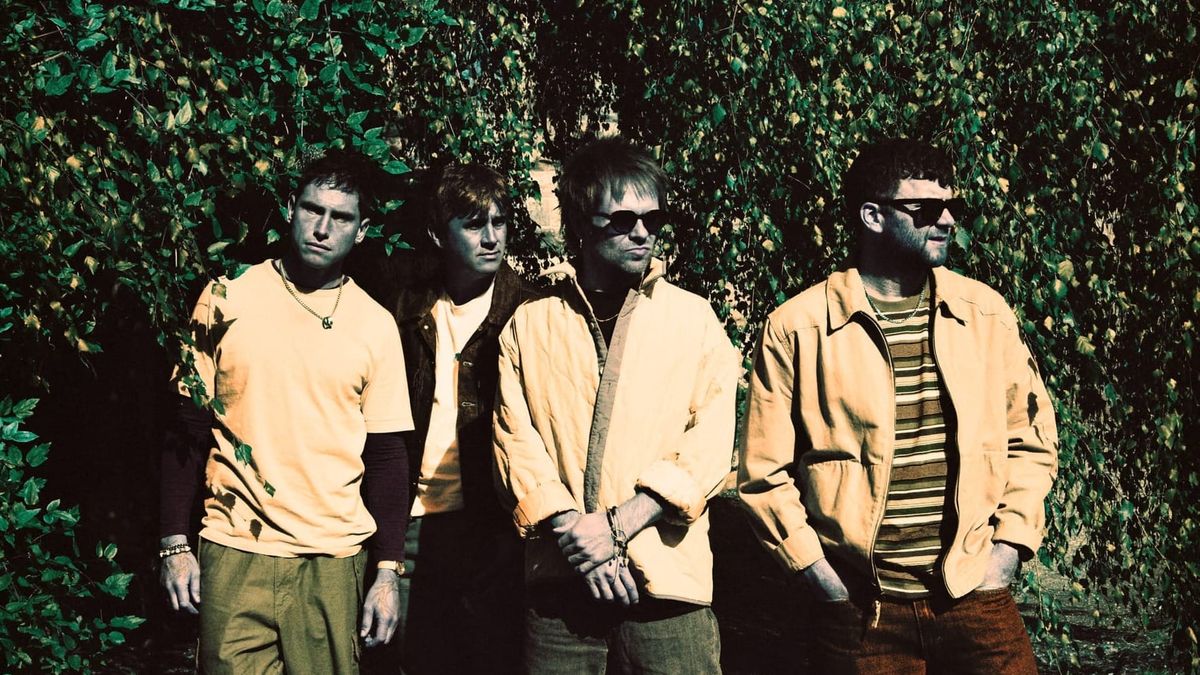
When people on my timeline come together and rejoice, it’s usually for one of two reasons. One of these can usually be boiled down into the category of ‘wins for the left, losses for the right’, i.e. the Greens winning the Gorton and Denton by-election. The other, the more common of the two, is music. Shiny new tour packages, festival line-ups, all the glorious stuff acting as anchors in the dark seas of gloom through which we swim.
On Friday, I was both a participant and an observer in one of these collective moments of joy. If this virtual town square was a real one, there’d be confetti floating through the air and people dancing and clinking their drinks. Enter Shikari had just dropped a new album, Lose Your Self, without warning. Everyone was plugged in and listening together, bonding in the excitement of it all, dancing in their kitchens and living rooms as the weekend beckoned.
For full disclosure, I knew this was coming. I’d had word of it from their publicist, keeping it a closely guarded secret while I attempted to secure some coverage. It wasn’t a surprise to me but I still enjoyed the freudenfreude of everyone else getting to experience what I had.
What I hadn’t envisioned was just how potent and colourful this shared happiness would be.
A new Enter Shikari album was never going to pass by in a flash. Even as they storm arenas and top the album charts, as they did with 2023’s A Kiss For The Whole World, they retain a unique ‘heroes of the people’ type status few bands have at their size. They’re a cornerstone of a British emo’s coming-of-age but one you never outgrow, a band you could share with your friends who know nothing about rock music at all, a group of men you could invite to sit with you in your back garden for some falafel or a beer. Their reputation for thrilling, rowdy live shows with laser-filled production is unmatched (their 2024 Wembley Arena show is one of my favourite gigs of all time). On top of that, they’re one of British music’s most forthright political voices, writing about climate change and Palestine before it was common for artists (there’s a reference to the use of white phosphorus in Gaza as far back as 2011’s third album A Flash Flood Of Colour.)
Something about the euphoria surrounding Lose Your Self felt different, in a way a conventional album rollout couldn’t have matched. The unexpectedness of it transformed its release into a moment.
There was no getting lost in the noise of New Music Friday, no sense of competition with every other new release out that week. It could exist on its own terms. It’s remembered more clearly.
Though over 12 years has passed since Beyonce dropped her self-titled fifth album – an expansive, critically lauded artistic statement in which every track had a music video – on a random Friday in December of all months, it’s still held up as the pinnacle of earth-shaking moves in music.
We remember U2’s 2014 album Songs Of Innocence for the same reasons, albeit less pleasantly given it was foisted on every iTunes user with no notice. “We had put a bottle of milk in people’s fridge that they hadn’t asked for,” Bono quipped later in his 2022 memoir Surrender. “It was a serious overreach.”
Crucially, a surprise drop like this invites us to listen differently. The album can be treated like the album it was supposed to be, an uninterrupted sonic journey that undulates and shapeshifts and changes in pace and crucially leaves us in a different place than we were when we found it. Without any singles, every song is on an equal footing and can be treated with equal importance. There’s no jarring transition from a song you’ve played for months into one you’re only hearing for the first time. Nothing gets heard out of its context; the album is its own context.
This is, of course, the best way to hear any album for the first time but Lose Your Self doesn’t feel like an album that wants to be put on shuffle – especially not when its final three songs form an elegant trilogy that it would feel sacrilegious to tear up and separate. The beautiful pay-off of it all in the final part – listen for yourself, if you haven’t already – certifies that easily.
Perhaps the surprise drop is a pro ‘album as art’ move. Equally, it’s the anti-commercialist one. It’s a deviation from the repeatedly trodden path of throwing a single a month into the ether and hoping people connect with it as much as, or more than, any other single that’s been released that week. I’ve spoken to enough artists to know that feeding an album to the fans like crumbs to the ducks sometimes sets their teeth on edge, as does playing into the hands of streamers’ fragmented playlist culture. It spits in the face of chart positions.
It brings what artists do back in line with their original intentions for embroiling themselves in the music industry in the first place, which is not to get muddied in the business of it all but is to create. It’s the anti-gimmick gimmick, which might explain why it’s endured far more than the more out-the-box album release campaigns of the past that have prevented the artists who think they can quit the album game from ever following through. Ultimately, not only is it simple, but at its core, it’s celebratory of the album as a format.
Incidentally, the methodology of a surprise drop that divorces art from the confines of business plans very much chimes in with what Lose Your Self is about, a commentary on individualism, capitalism and AI and the chokehold each of them have on both our thought processes and progress as a society. “When I was a young boy, I dreamed of maximizing shareholder value,” is one such wisecrack. Of course it’s not meant to be chopped into pieces. Whether intentionally or not, it wants to cure both your pessimism and your brain rot. Can you really change the world if you can’t concentrate on a 41-minute album?
Not everyone can do this, of course. Your average local band couldn’t, and if everyone did it, it would dull the concept’s meaning and impact. Those that do offer us a welcome jolt, to engage with music differently, to think about our consumption of it, and to partake in the fulfilling act of hitting play and letting the music take you wherever it wishes.
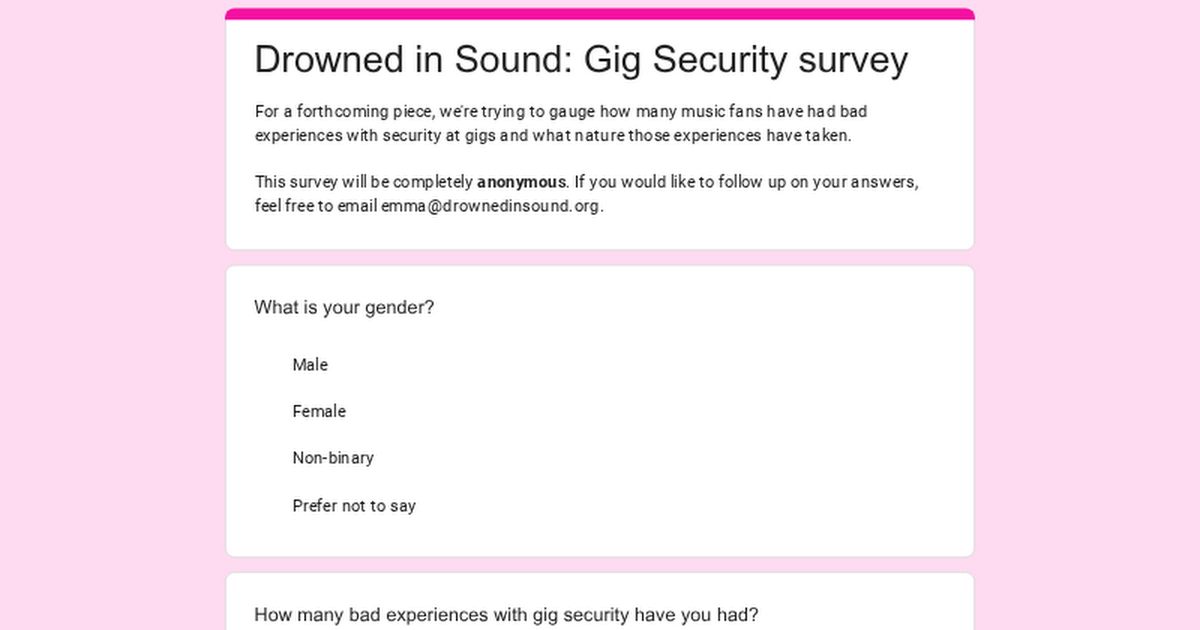
DiS wants to hear about your stories with gig security
Have you ever had a bad experience with security at a gig? Drowned In Sound is looking to hear from you. We're surveying our readership for a future newsletter. You don't have to go into extensive detail about your experience if you don't wish - just ticking some boxes for us is more than enough. Your responses will be anonymous.

The grassroots levy funds beds for musicians
Ever wondered where that extra pound on your gig tickets might go? One such project is the Music Venue Trust's new Stay The Night, Feel At Home initiative, which aims to build accommodation for artists in underused parts of venues to save them splashing out on hotel rooms.
Norwich venue Voodoo Daddy's has been the first to benefit and the scheme has also helped 21 young people who were involved in building it gain qualifications in skills such as carpentry, painting, decorating and health and safety.
"It's a game changer for us, it puts us on the international scene, it puts us on the A-list of touring around the nation," venue manager Ben Street told the BBC.
"To be able to offer that means it's the difference between not being able to take on a show because the costs on both sides are too much and actually saying 'Let's go ahead and do it.'"
Indeed, Street has already been able to book two bands from the US because the venue now has the advantage of free accommodation. What a win.
On that note, if you've ever wondered if the big gig you're going to is supporting the grassroots levy, the LIVE Trust have put up a guide to the April shows contributing here. Among the artists who are participating or have participated are 5 Seconds of Summer, Rick Astley and Olivia Dean.
Robert Del Naja stands up to proscription of Palestine Action
BREAKING: Massive Attack's Robert Del Naja unlawfully arrested under the Terrorism Act.
— Defend Our Juries (@DefendOurJuries) April 11, 2026
He was amongst hundreds of protestors arrested for holding signs which say "I oppose genocide - I support Palestine Action".
The ban is unlawful, and so are these arrests. pic.twitter.com/FOgvC0z7x2
Massive Attack have spent decades standing with the people of Palestine, participating in a cultural boycott of Israel as far back as 1999. Just under a year ago, they were rallying against the sponsorship of Co-Op Live by Barclays over their alleged ties to Israel.
Now, Robert Del Naja has taken that stance to a point where he's potentially put his own career on the line. He was one of 212 people arrested in London at the weekend on suspicion for supporting a proscribed organisation, taken away by police by holding a sign reading "I oppose genocide, I support Palestine Action."
"Being a musician, obviously, there was a lot of trepidation around how we might not be able to travel and get visas," he told the Press Association.
"But I thought 'this is ridiculous' and then the police making that U-turn to arrest people again, I thought that is even more ridiculous.
"So I'm going to hold a sign today.
"If I get arrested, I feel very confident that if I stand up in court with the right guidance and say 'this was an unlawful arrest and, therefore, I don't accept it'."
You can read Robert Del Naja's statement in full on his Instagram.
Reminder: Drowned in Sound is a founder-owned, proudly independent publication and podcast with an insightful, funny, and kind online community. Become a paid subscriber to support our work and access all our articles and exclusive content.