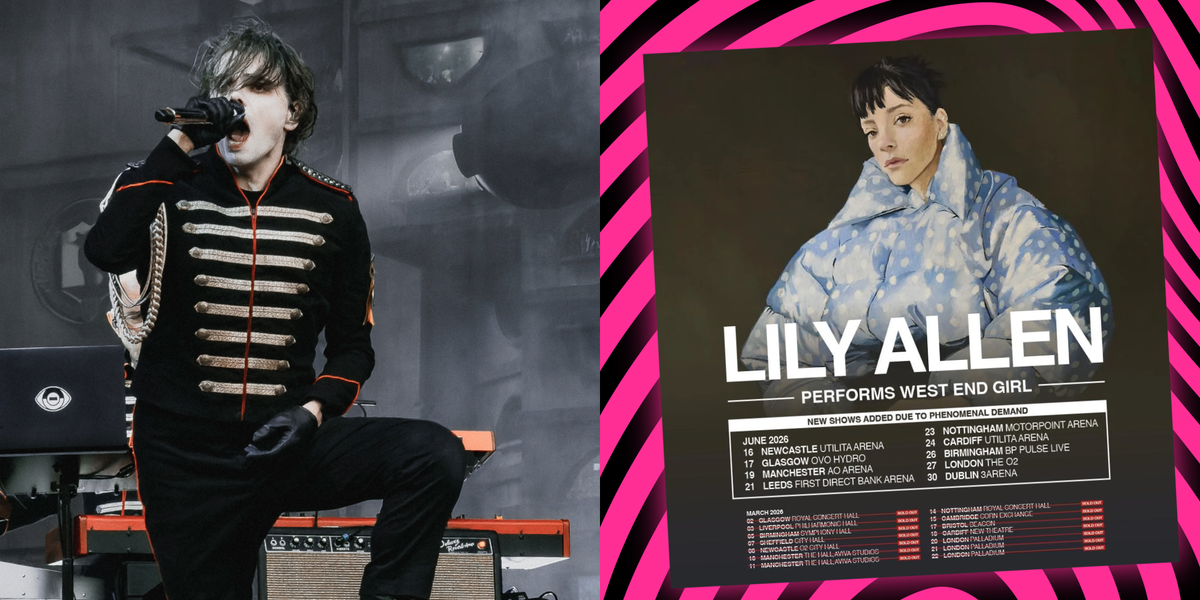
The Lily Allen discourse didn’t need to come back. By now, she’s taken her new album West End Girl from the London Palladium to theatres and arenas in the UK and USA, playing it in full with no other songs, bar those played by an orchestra in the show’s first act. And, shock horror, she’s not even saying a word to the audience. (The keyboard bashers would do their fruit if they ever saw a Sleep Token show…)
I found the whole thing yawn-worthy to begin with the first time it flooded the internet. Then again, it perhaps comes from a place of bias. Artistically and commercially, the idea of centering a show around West End Girl in full never seemed outlandish – it was a sweeping success, plus an artist is bound to want to flex their new material instead of rehashing the same songs countless times. Given its subject matter - a tale of autofiction charting the unravelling of her marriage to David Harbour by way of an open marriage she didn’t want – it may well be an exercise of catharsis too. During one show, she cried while performing ‘Relapse.’
It’s a complete narrative that gets to be preserved when played live in full instead of being sliced up and sandwiched between ‘Not Fair’, ‘The Fear’ et al. Frankly, anything that flies in the face of playlist culture and puts the brain-nurturing power of an album in the limelight will always get a grin out of me.
I do have some personal bias: I love album-in-full shows. In fact, in the past week I heard two timeless albums in full within days of each other: Crisis by Alexisonfire and The Black Parade by Chemical Romance. (2006 was great. I don’t remember much of it, but musically, it was great). Both of these shows, played in honour of their 20th anniversary, hold up as some of the greatest live sets I’ve ever witnessed.
The energy of those shows is warmer, more affectionate, everyone waiting on tenterhooks for their favourite lesser-played deep cut. That’s part of what makes album-in-full shows special; it’s a chance to hear songs that rarely get dusted off loud and get crowded out by the bigger hits. There’s something personal and individual about it. Everyone’s favourite deep cut is different; because they’re less celebrated, your love for that one particular song feels like a coveted secret. The joy is not just in hearing but looking around and realising that for so many other people, that song was their secret too.
The flipside of this is that an album-in-full show lives and dies by its deep cuts. Besides, they will now make up the majority of a set. On the one hand, this can be quite exposing, leaving the cracks in an album inescapable, visible for all to see. The first album-in-full show I ever saw was You Me At Six’s Sinners Never Sleep in 2022, a belated tenth anniversary celebration at the Slam Dunk sites in Leeds and Hatfield. That show was a reminder that the ballads on that album are arguably too long, for example, and a couple of them got the crowd drifting towards the toilets and bar. (I call them ‘drinks run moments’).
This can also be why album-in-full sets sometimes don’t work as well at festivals, especially for bands who aren’t headlining, gathering a half-interested crowd only waiting to hear ‘the song’. My friends and I agreed Head Automatica playing Decadence at full in Slam Dunk 2024 might have worked better as a headline show, given the number of people who were just waiting for ‘Beating Heart Baby’ at the end. (Not me. I was here for ‘The Razor’, ‘Dance Party Plus’, ‘Brooklyn Is Burning’ etc. But not everyone is me.)
The other question is the politics of playing extra songs at the end. It’s a nice courtesy especially when certain bands’ sets would feel incomplete without a couple of extra hits, as well as a necessary measure in order to bulk out the set to a proper headline length. Most of the album-in-full shows I’ve seen have done this, but the other argument is it can disturb a sense of cohesiveness and atmosphere building. Slipknot refusing to play any extra songs at the end of their anniversary tour for their 1999 self-titled debut was a point of contention online, but the whole set ended up feeling strangely satiating and the omission of ‘Duality’ et cetera wasn’t as glaring as it might have been on paper. This could also explain why Allen didn’t play any extra songs at the end of her set, even if some eyebrows were raised by the inclusion of the orchestra as a substitute. Better than nothing, perhaps?
The most underrated type of album-in-full set is one I’ve noticed become more common in recent years, largely in the rock and metal circles I call home. That’s the most-recent-album-in-full set, often played at the end of an album cycle or perhaps a year or so after said album comes out. It’s a chance to celebrate an era of both the band’s life but your own, an opportunity to revisit a soundtrack from the past year. It gives time for fans to learn and connect with new music – new music in full straight out of the gate is less advisable, as Becky Hill learned recently when she was booed for doing so with music that wasn’t yet out. Too harsh? Yes, but perhaps there was a better time and place than a secret set at festival.
Regardless, the album-in-full set is not a concept to shirk at, regardless of the genre, and neither do they have to be nostalgia-fests either. Sometimes, they make some of the most special shows. Long may they continue.
Related read: Sophie Heawood's fantastic response to West End Girl which was printed in the tour programme (Substack, Oct 2025)
IN THE NEWS THIS WEEK
An AI music generator funding independent artists? Su-NO.
AI music generator Suno has launched an incubator programme for independent artists in the form of grants, mentorship and marketing support. That might sound good on paper, but the gritty details reveal a more troubling picture. For one, it requires artists to disclose Suno's involvement on songs they share to social media. More disturbing is the fact they are also not allowed to openly criticise Suno either.
Neither are surprising with a deal like this, of course, but just as it was difficult to stomach when Suno stuck their hands in live music with an investment in Songkick, it's disconcerting to imagine them muddying the waters of independent music either. Art and AI slop do not and should mix.
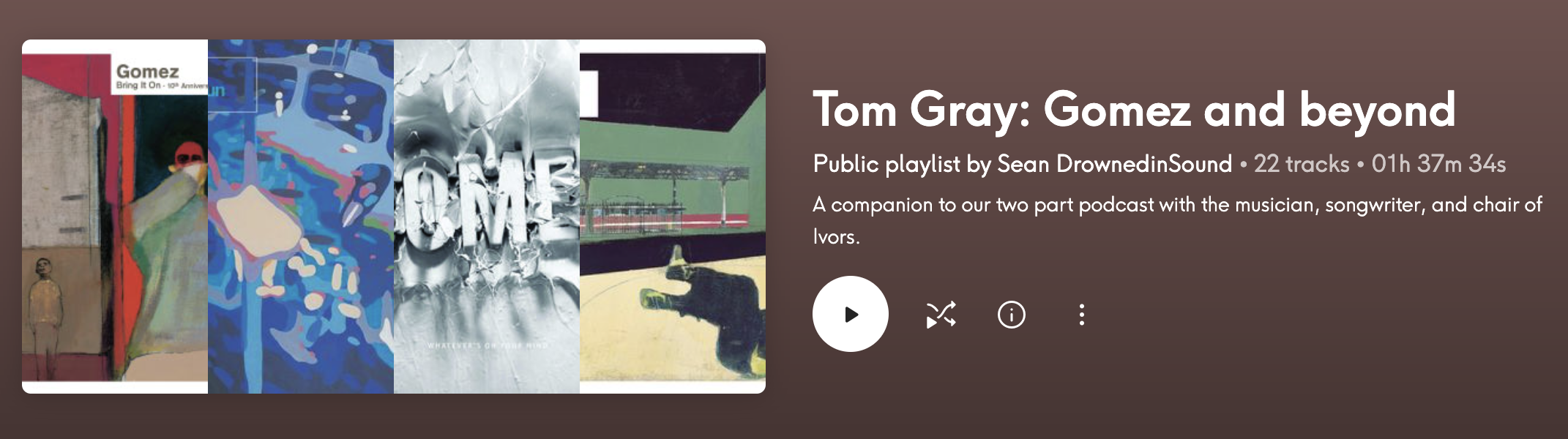
Tom Gray: Gomez and Beyond; A companion playlist to our DiS Podcast interview with Gomez's Tom Gray where Sean goes deep with him on the Broken Record campaign and government inquiry into Spotify.
The playlist features tunes from Gomez, some of the artists they inspired, a few Ivor Novello Awards 2026 related songs, and some acts discussed on the podcast including Frightened Rabbit, Kate Bush, Massive Attack, Elbow, and Tim Buckley.
Extreme weather hits music events across Europe
Last week was not a good week in the slightest to have been at a large-scale music event in the UK and Europe (Glastonbury unknowingly chose a good year for a fallow year). Dutch dance music festival Defqon.1 was cancelled over a red warning for extreme heat, while Garorock (France), Paradise City (Belgium) and Scandal (Netherlands) all experienced evacuations.
John Rostron, the CEO of the Association of Independent Festivals (UK), told NME:
“The ultimate challenge is that you plan and budget a festival a year before. A year ago we were ready for extreme weather, but we weren’t ready for this – at this scale. This is a new thing we have to learn from and plan for in the future because it’s here to stay. This is the new normal. These record-breaking temperatures are going to be broken again and again.”
If there was a need for any further proof that climate change is happening now, he also added that in 2024, 10 per cent of the cancellations of UK festivals were related to extreme weather.
 Emma Wilkes
Beyond The Music Reveals 2026 Agenda
Beyond The Music is a conference based in Manchester, co-founded by the son of Factory Records' Tony Wilson and some of the team behind Wilson's legendary In the City Conference.
This week they revealed the format for its 2026 conference that DiS will be heading upto and you can grab a ticket to join us here.
Liberty and the Pursuit of Happiness: three days and four nights of changemaking summits, keynotes and lectures at MediaCity, Salford, bringing music, tech, film, gaming and policy leaders together, 6-9 October.
It opens with the 24th anniversary premiere of 24 Hour Party People, with Steve Coogan and Michael Winterbottom, and closes with a first-of-its-kind All Content AI Summit convened by Andy Burnham.
New Music: The Anchoress releases new single inspired by Virginia Woolf featuring James Dean Bradfield
 Liberty Dunworth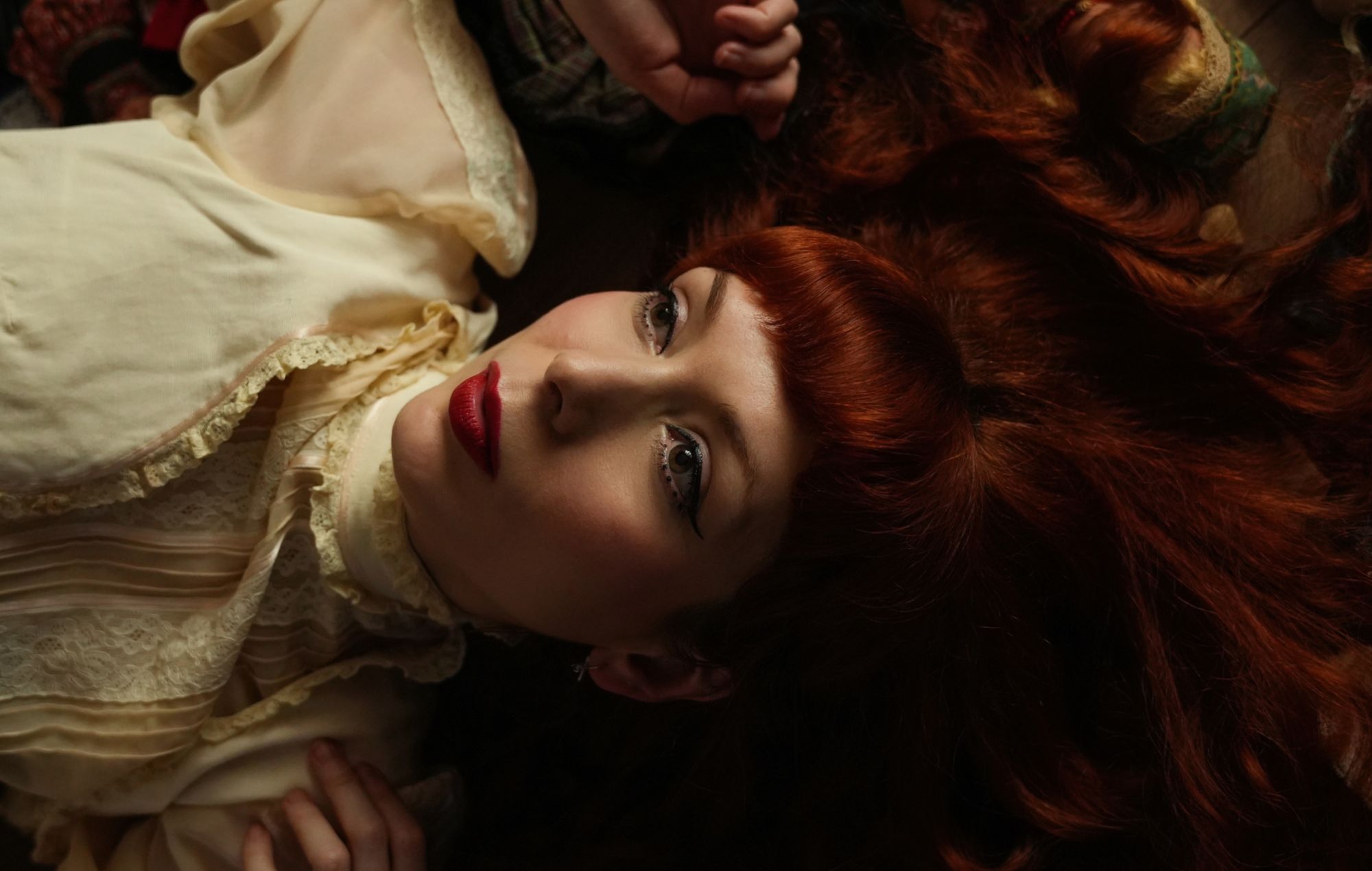
News Round-Up
- Bring Me The Horizon's Oli Sykes Was Told Waving Palestinian Flags At Reading Festival "Would Likely Carry Career Ending Consequences" (Metal Injection)
- Three-quarters of StubHub UK arena listings from just three sellers, research finds (iQ)
- Watch Hayley Williams cover Sinéad O’Connor’s ‘Mandinka’ in Dublin: “This goes out to all the Irish artists who use their voice, they’re so inspiring" (NME)
- A collection of some of the rarest vinyl in the world have sold for record-breaking prices. (BBC)
- Blur drummer loses court battle for £200 million in unpaid songwriter royalties: David Rowntree claims that PRS pays ‘black box’ royalties, also known as unidentified royalties, to publishers, but not to songwriters. (Independent)
- Trump’s Freedom 250 Stage Appears to Break Apart During Rehearsal: Video (Newsweek)
- Vanilla Ice’s Freedom 250 Concert in D.C. Canceled Due to ‘Inclement Weather’ That Doesn’t Materialize (Variety)
- Live Nation Confirms CEO Talked to Trump Before Surprise Settlement in Antitrust Lawsuit (Billboard)
- Chris Brown ordered to pay housekeeper $13m after dog attack (BBC)
- Local Singer Marries Podcaster (Pitchfork)
- Finally, the many talented female and black Irish musicians are beginning to get the recognition they deserve on Ireland's radio stations (Irish Examiner)
Join The Chat
The DiS community are sharing their favourite albums of the first half 2026. Have a rummage through some of the records they're recommending and share your own.
 JaguarPirate