Emma Wilkes: In this week's newsletter we have a powerful track of the week, a great music book recommendation, plus some news. Before all that, I ponder why, considering how women are treated and, for all we get wrong in the UK, like indulging Nigel Farage and scapegoating immigrants and trans people instead of billionaires, culturally we - women especially - remain a powerhouse.
Even in a reeking, misogynistic world, women can thrive in pop music. Right now, it looks like they own it.
Whether it's making speeches at their shows or when picking up awards, we see women with agency and authority, getting a stage to reconstruct their own world, putting across a point and sparking joy and creating community as they do it. Chappell. Sabrina. Charli. Olivia. They've all made their own place in pop culture's history books already.
In the UK, we're holding our own. The Grammys earlier this month affirmed this, starting with Olivia Dean's triumph in the coveted category of Best New Artist - the first British artist to win since Dua Lipa in 2019 - continuing a streak of amazing victories (How often do you see an artist sell out The O2 six times over on their second album?).
Then there's Lola Young, who beat a crowded field consisting of Sabrina Carpenter, Lady Gaga, Justin Bieber and Chappell Roan to win Best Pop Solo Performance for 'Messy'. FKA twigs capped off a sterling year to win Best Dance/Electronic Album for her widely celebrated EUSEXUA. Raye won the Harry Belafonte Best Song for Social Change award for 'Ice Cream Man', an unflinching exploration of the effects of sexual harassment.
There was also a sense of shock that PinkPantheress didn't win in either of her two categories after 'Illegal' became one of the most virulent songs of the year and Wet Leg were in the same position for their two nominations for their album Moisturizer and its single 'Mangetout'.
All of these are things to be celebrated. For all we get wrong in this country, like indulging Nigel Farage and scapegoating immigrants and trans people instead of billionaires, culturally we remain a powerhouse. This will be put on show again when the BRITs take place in Manchester at the end of the month, in which Dean and Young have racked up the most nominations, with multiple nods for RAYE, Lily Allen and Skye Newman.
At least that's how it looks if you don't glance beneath the surface of the iceberg. We've peeled back the varnish-like layers of girlboss feminism to not just look at the shininess on top and call it done, because the trickle down effect can only go so far. These are wins for women, but only for some women.
Not every woman in music gets to thrive as much as these lucky few do. In fact, the infrastructure put in place to support the Olivia Deans and Lola Youngs of the future is in a shaky position.
Vick Bain from The F List has recently completed an academic analysis of 150 feminist grassroots music initiatives. The article is due to published soon but in lieu of publishing, she told us she found that over a third of initiatives now no longer exist because of a lack of funding or burnout. Among these are Cactus City, a safe space studio for women and gender non-conforming people (who I once applied to intern with) which went on pause in November 2023, and Safe Gigs For Women, which closed in November 2025 after ten years of operation.
"Things do seem to be getting better in certain areas," Bain acknowledges. "And these wins are great for the artists personally as well as modelling success for others. But there is still huge systemic discrimination across the industry, the figures for inclusion are nowhere near 50/50 so these wins can mask the reality for most women.
"The percentages of funds supporting women in music are shockingly low, with a 6-7 per cent success rate, and the work we are doing in these organisations is just not properly supported. The work the industry is doing is nowhere near what is needed."
Women might be winning Grammys, but they've risen to the top of an industry in which almost three-quarters of musicians have considered giving up on their dreams due to unsafe or unfair working conditions, as reported in Youth Music's 'Just The Way It Is' survey, which we discuss on this week's edition of the Drowned in Sound podcast with the alt-pop musician Girli.
 DiS Support
Youth Music's survey revealed that a staggering 90% report being paid unfairly for their work and just under a third of women say they have been sexually harassed while working as musicians.
Even a deep, detailed, multi-year report into misogyny in music, which warned of "endemic" misogyny and "urgent action" needed to tackle it, was rejected by the Government last year. An independent organisation designed to handle complaints, CIISA (Creative Industries Independent Standards Authority) is still not fully live.
This is fundamentally a structural issue. It's enabled by an intersecting network of working models that disadvantage ordinary working people in the music industry - low or no pay, discrimination and harassment, barriers to reporting and a work culture that is inherently informal and exploitative. This is particularly true when the vast majority of music industry workers are freelancers and don't receive the protections that traditionally employed people have. When women are winning at the top, we might forget for a second what hurdles they had to clamber over on the way up. We see them succeed and think a broken system can look vaguely functional.
We don't always get to hear the stories of those still in small rooms, whose names we might never know. We don't get to find out just how many were ground down to a nub and chose to quit instead of pushing themselves beyond breaking point. When bigger names from Raye to Victoria Canal tell the stories of the abuse they suffered, we see the tip of the iceberg. The fact that Youth Music's survey found.
It's an all too familiar pattern. Increasing wins at the top, diminishing returns at the bottom. We see it with live music as megagigs dominate while grassroots venues struggle. Execs in suits flaunt their hefty paychecks while most musicians can only dream of making minimum wage. We're nowhere close to a music industry that works for the majority, and until then, only a select few really get to triumph.
Track Of The Week
'Slap On The Wrist' by Girli
This is one of the bluntest (yet catchiest) reflections I've heard of my own lived experience fearing violence from men, not to mention the all too frequent impunity wrongdoers experience. Girli beautifully puts across the contrast between the fear we as women and femme presenting people carry around on a daily basis, the burden placed on us instead of the perpetrators, just because it's more convenient than having to overturn a system that enables this.
If you like what you hear, Girli is on our podcast this week talking about her activism and the need for better safeguarding in the music industry.
You'll also notice the video for this song offers a great crossover of worlds between her and previous podcast guest Eliza Hatch of CheerUpLuv, depicting recreations of testimonies from women detailing where they experienced sexual harassment - at home, while on a run, in a shop. The inconvenient truth is it happens anywhere and everywhere.
'Slap On The Wrist' also appears on this week's playlist titled 'Believe Women', a compilation of some of the greatest songs of women's survival and resistance. Sean remarked that it could also be titled 'Educate Men'. If you've read or listened to this as a man, I implore you - listen and learn.
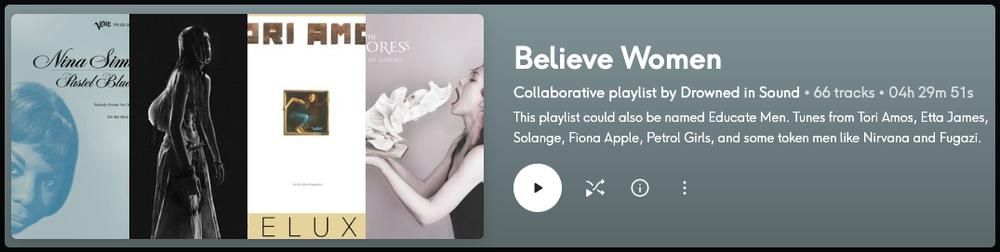
As part of our partnership with Qobuz - the service for music enthusiasts featuring high quality sound so that we can rediscover music - we create a companion playlist for each episode of our podcast. Listen to this week's playlist, opens with Tori Amos and Sofia Isella, and contains so many powerful tunes by women.
Start your 30-day free trial of Qobuz:
I'm in the new issue of Crack Magazine!
At the top of the year, I predicted that human curation and print media would swing back into fashion. I've done a bit of both in the new edition of Crack, in which I'm making my debut by offering some heavy music recommendations in this month's edition of The Filter. The Oscar-winning artist and composer Daniel Blumberg, who scored The Brutalist, is on the cover - you can pick up your copy here.
Need something new to read?
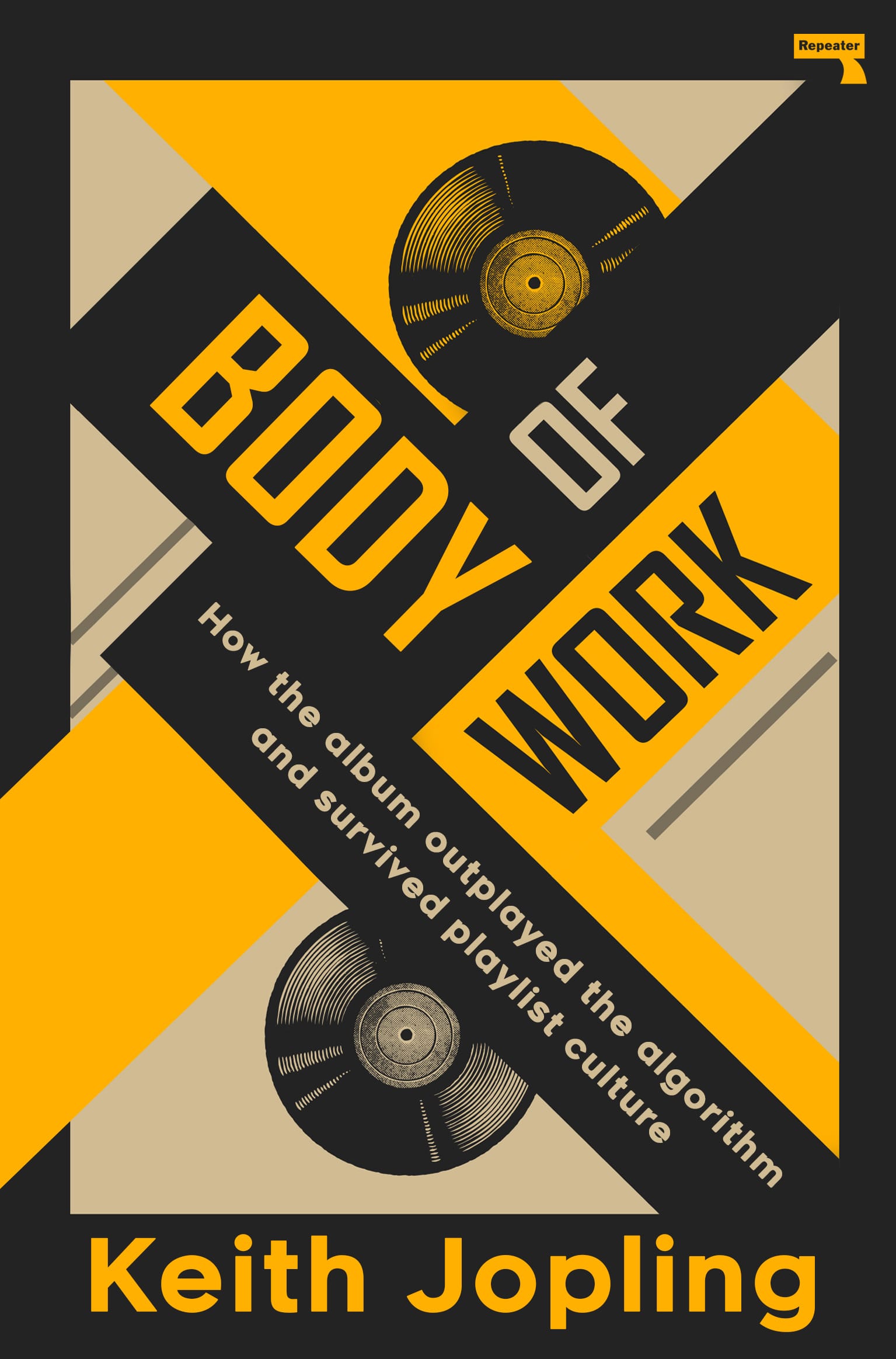
Hoping to read more in 2026? I'm a regular devourer of music books and I've got just the recommendation for you. I was lucky enough to get an advance copy of Keith Jopling's fantastic new book Body Of Work, an insightful, joyful deep dive into the history of the album, why it's endured into 2026 and what the future might hold for a format that's outlasted the gloomy predictions of its naysayers for years. If you lean more towards reading music books about modern times as opposed to the more nostalgic sort, this will 100 per cent be up your alley. In fact, as an appendix, he lists one album for every year of the 21st century that he considers essential.
You might have also heard Keith on his podcast The Art Of Longevity, in which he sits down with artists to unpack what it is that's meant they're built to last. Body Of Work is out now via Repeater - you can buy your copy here.
Kid Rock and Drowned In Sound finally agree on something
Kid Rock - a prolific Trump supporter who even performed at his second inauguration - would probably disagree with us on a lot of things. However, after he testified before Congress last week on the issues affecting the live music industry and criticised the Live Nation-Ticketmaster monopoly, it appears we are aligned on something.
Junk fees, soaring prices and scalping will impact fans across partisan lines, making it the great unifier in a deeply divided political climate. Truly, other than a handful of corporations, nobody is winning under the current market conditions - not fans and certainly not artists either.
“The economic foundation that supported artists in the past is crumbling. Piracy is threatening their livelihood. Secondary ticketing is driving up prices for the fans with absolutely no benefit to the artist,” Kid Rock said. “Needless to say, that experiment has failed miserably. Independent venues have been crushed. Artists have lost leverage. Fans are paying more than ever and getting blamed for it.”
The country-rock artist also presented a handful of solutions - allowing artists to control who sells their tickets and how; capping resale prices (as the UK promised to do late last year) and enforcing the Bots Act to penalise those acting in bad faith.
 Sean Adams
Artists revolt against Wasserman
Amid the constantly nauseating headlines coming out about the Epstein files, artists have been taking a stand against Casey Wasserman, the CEO giving his name to one of music's largest talent agencies (for musicians, that means their booking agent). Wasserman's name has appeared in the files, the publication of which revealed flirtatious emails sent to Ghislaine Maxwell in 2003.
Although Wasserman has said he "deeply regrets" the emails and denies having any connections to Epstein himself, artists on the agency have spoken out against him.
The first was Bethany Cosentino of Best Coast, who asked to have her and her band's name removed from Wasserman's website and called for him to step down and for the business's name to be changed.
“We are tired of being asked to treat proximity to something horrific as an unfortunate situation we should simply move past – especially when the person involved still holds all the power," she said in a statement on Instagram. And we are tired of watching harm minimized or brushed off as ‘a long time ago,’ while the impact of that harm is still very real, especially for women and survivors of sexual assault.”
Chappell Roan has now confirmed that she has left the agency, but did not directly cite the connections to Epstein as her reasons. Wednesday have also cut ties with them, while Beach Bunny, Salute and some of its agents have also threatened to resign. Water From Your Eyes and Alison Krauss have also released statements condemning Wasserman.
Many of the artists represented by Wasserman (who traditionally represented sports stars) were represented by independent agencies Coda and Windish before those orgs parted with and were folded into Paradigm, which was then bought by Wasserman.
The future is bulletproof!
If you didn't catch our announcement earlier in this week, Drowned In Sound is partnering with the Peace & Justice Project's new festival Bulletproof, which takes place on 4th-6th June 2026 across three independent venues in East London. It's set to be a huge celebration of community, political action and grassroots music with a stacked line-up led by Maruja, Sprints and Pussy Riot: Riot Days.
Tickets are now on sale, which you can buy here, and check out the rest of the announcement below.
 Emma Wilkes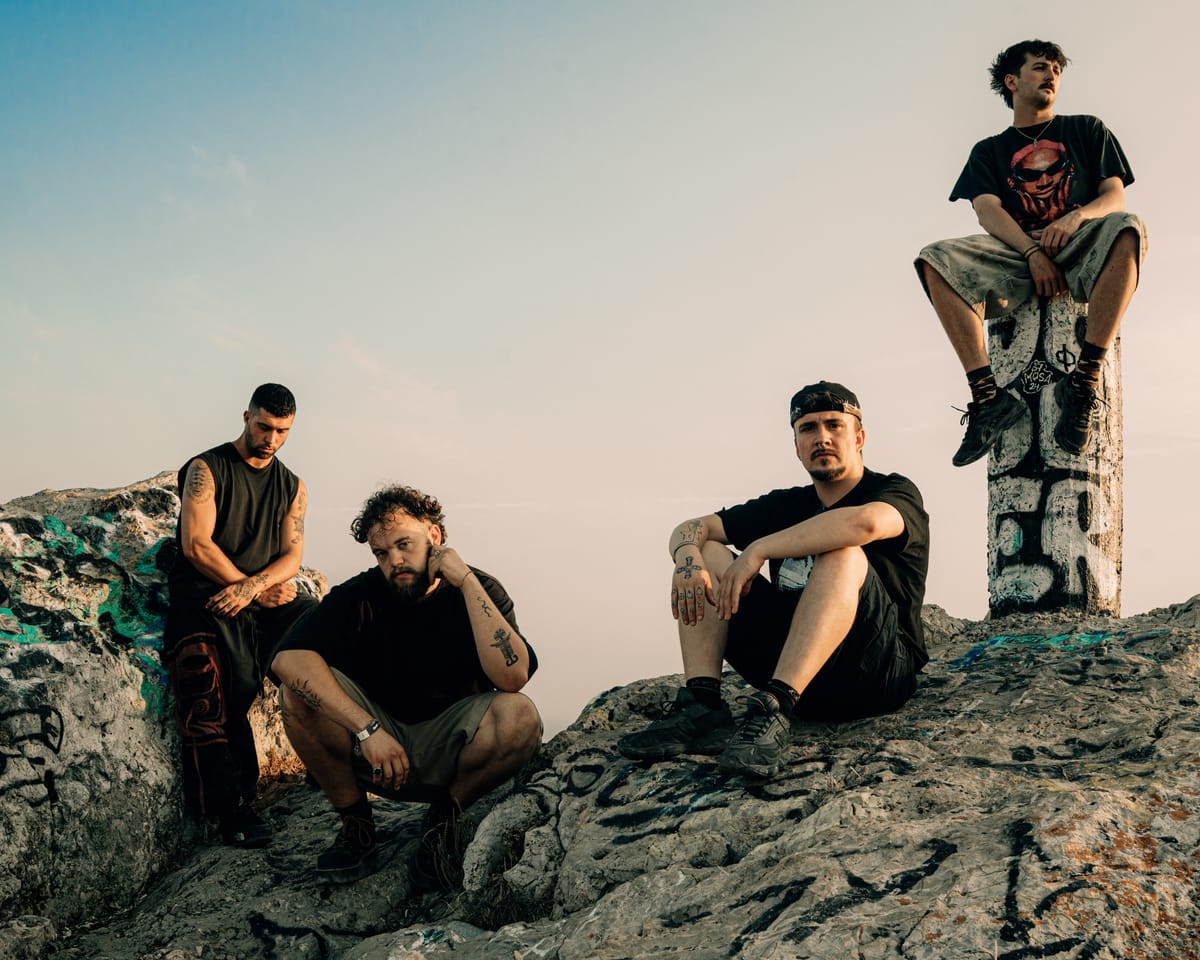
Read our guest newsletter with Anagricel Duran
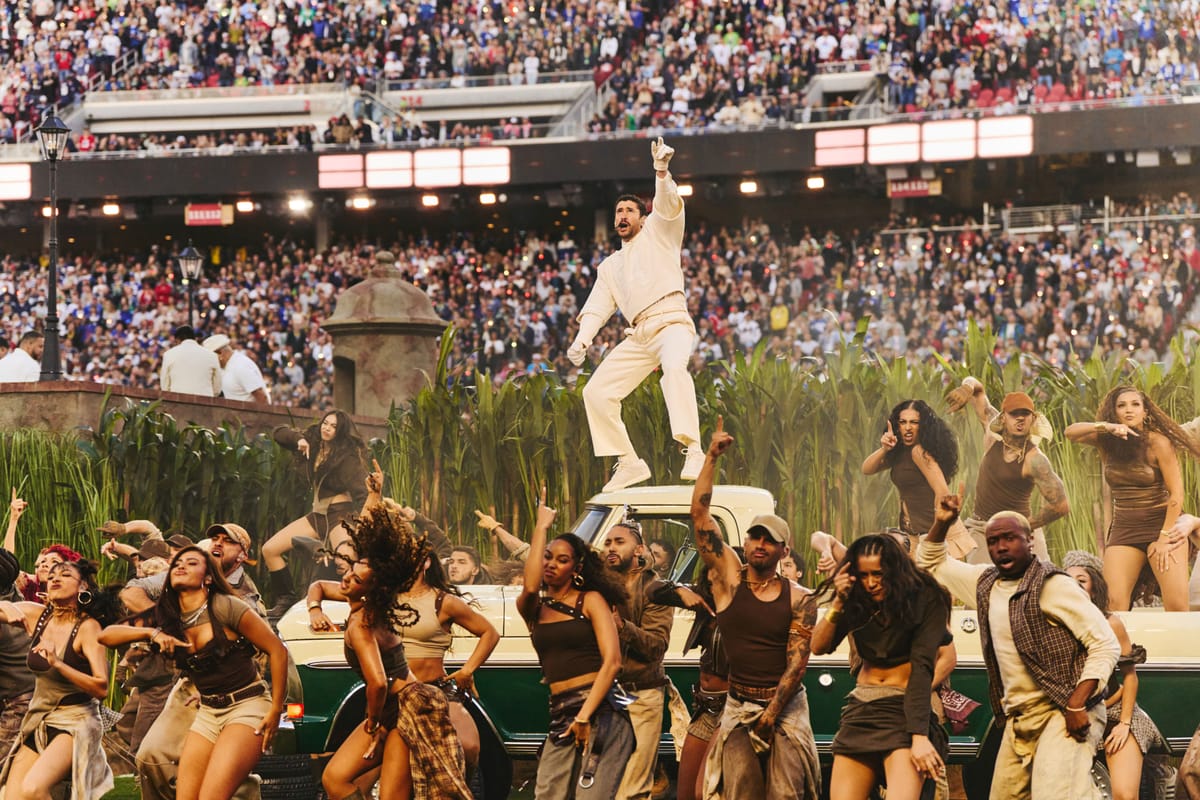
Amid the heaviest news cycle in quite some time, Bad Bunny's Super Bowl Halftime Show met the moment brilliantly with its joyous celebration of Latin American culture. My friend Anagricel Duran, a brilliant music writer who I worked with at NME, wrote us a similarly celebratory guest essay about such a landmark moment for Latin American representation, and what it meant to her as the descendent of immigrants from the Dominican Republic.
"I am still crying while typing this up and will probably continue to cry every time I watch this performance because, for me personally, this is the first time I have seen my culture on what is essentially the US’ biggest stage and got to see it represented truthfully."
Go and give this a read if you're looking for a slice of hope today - and editors, go commission her.
 Anagricel Duran