


In this week's Drowned in Sound newsletter:
- Track Of The Week is sure to satisfy fans of both electronica and punk
- Find out about the legal case that's improving accessibility at major festivals
- Missy Dabice from Mannequin Pussy asks Spotify to chat
- Plus news on Trump getting involved with Live Nation, Milton Keynes council doing something great, and a rally against the far right.
- But first, Emma examines whether the handful of new arenas in the UK could succeed or fail, or if we really need them
Arenageddon: Are all these new venues necessary?
As much as I love live music with every fibre of my being, something is making me cynical. In the last couple of weeks, there's been a run of news stories about a new crop of arenas being constructed across the country.
First, there was some movement on long-delayed arena The Sage in Gateshead (not to be confused with The Glasshouse, which used to be called the Sage), followed last week by confirmation of the opening programme for the new British Airways ARC venue in west London at the Olympia, which opens in June.
Several new arenas are slated to open in the next few years across the UK, following the trend set by the now-frequently visited Co-Op Live in Manchester almost two years ago (once it ironed out its many kinks in its ill-fated first weeks of operation.) A glossy event took place last month to unveil the forthcoming Aviva Arena in Bristol, which is opening in 2028 in the same year as another new arena in Cardiff Bay.
In some ways, development of all these arenas could seem like a harbinger of good things – more jobs, more money flowing around local economies, and of course, more gigs. These are all valid benefits. Greater access to larger gigs is certainly a bonus, especially for younger families who are likelier to give their kids their first concert in a larger arena with seats than in a club venue.
It’s indicative of the capital behind live music events being greater than ever, and as we already know, megagigs can get a certain type of business person to have vivid visions of overflowing bank accounts. The numbers back it up: in 2025, The O2 had its busiest year ever, hosting 239 gigs. AEG’s UK touring and festivals arm AEG Presents posted turnover of around £340 million in its latest financial year.
When it comes to how necessary some of these venues are, the mileage may vary. Building an arena in Bristol has been floated for years, and knowing how rich the music culture is there, it’s rather surprising to think that it doesn’t have its own arena. Instead, gig-goers in that area of the country have usually had to schlep over the Severn Bridge to the arena in Cardiff, if a tour makes it there. More arenas could help pull music’s centre of gravity away from London.
By contrast, the redeeming purpose of the 3,800-capacity British Airways ARC is a little less obvious. At a punt, it’s locationally filling the hole the famed Earl’s Court left when it closed in 2014. While west London’s not buzzing with gigs as much as, say, north or especially east, did we need another corporate-sponsored venue when the capital does just fine with similar-sized spots like the Roundhouse, Troxy, or Brixton Academy?
The other question is one of being fit for purpose, or whether these developments are conducive to moving with the times. With the way live music is drifting, these arenas could well be standing empty for longer than intended. The cost of putting on large-scale events has already exploded in recent years, and that effect will continue, especially as soaring property taxes could double some arenas' bills. The knock-on effects from the war in Iran could be profound, adding to these ballooning prices - it's not cheap to power these huge halls. It’s one reason cited for the biggest artists pivoting away from large scale touring towards residencies in one or two particular venues, a decision taken in recent times by artists such as Harry Styles and Ariana Grande.
Not every artist will choose this route, but it does diminish the hope of, say, bringing Sabrina Carpenter to Gateshead or Chappell Roan to Sunderland, especially when UK tours have been curtailed and arena tours might only encompass 3-6 dates, or just take in Manchester and London. Will these arenas have packed live music programmes or a line-up mostly of comedians and Disney On Ice?
The other potential downfall is if these new arenas continue to tip the balance of the live music industry in the wrong direction with regard to the interplay between large-scale corporate events and the grassroots sector. Already we have a climate where megagigs flourish and the grassroots sector has struggled, and what would be the point of allowing the former while the talent pipeline is suffocated?
In 2023, Music Venue Trust CEO Mark Davyd cautioned that no arenas should be allowed to open until the £1 grassroots levy became normalised, understanding that it was pointless if the top should bloom while the roots withered.
This is, of course, still a theory.
Davyd's warning was given three years ago and the dial has started to move. There’s more hope in his messaging than there ever has been this side of the pandemic, to the point where this year’s annual report was the “least worst” issued since lockdown.
By 2028, the landscape might be a better one in which a flourishing grassroots sector and a booming arena sector can support each other on equal terms. Of course, that remains to be seen, and the game can change far more and in different ways than we could ever foresee.
 Emma Wilkes
I’m never going to write off arena shows. I’ve been to two – Biffy Clyro and Deftones – already this year; I’d be a hypocrite to do so. Maybe by the time these arenas open, my cynicism could evaporate if we have a better climate to keep filling them, both with artists and punters. A less hostile environment for culture is something I could never be cynical about.
Related Watch
On the DiS podcast, Sean recently met Jack from The Ticket Bank, who aim to get more people who are on benefits into live shows
Track Of The Week
'What Is She For?' by CLT DRP
CLT DRP's music could come stamped with a guarantee that you've never heard riffs quite like these before. Wonkier, techier and more idiosyncratic than punk but with a more organic feel than electronic music, theirs is a thought-provoking, groove-inducing Frankenstein of sounds. Equally unique is Annie Dorrett's vocals, delivered first in a mocking purr, and then they sing-speaks their lines almost like in a play.
Equally compelling is this song's message, which centers around resisting the constraints and expectations of conforming to traditional gender roles. It's a laundry list of nagging microaggressions - 'Token checklist/Feels more like sport', 'Just stop yelling/It might work out.' It goes beyond the binary too. Something about a non-binary vocalist singing 'What is a woman/What is she for?' - a notorious TERF dogwhistle - feels, consciously or not, like an especially delicious declaration of defiance.
If you like what you've heard, CLT DRP will also be performing at Bulletproof, the new London festival, we are partnering with, in June.
 Emma Wilkes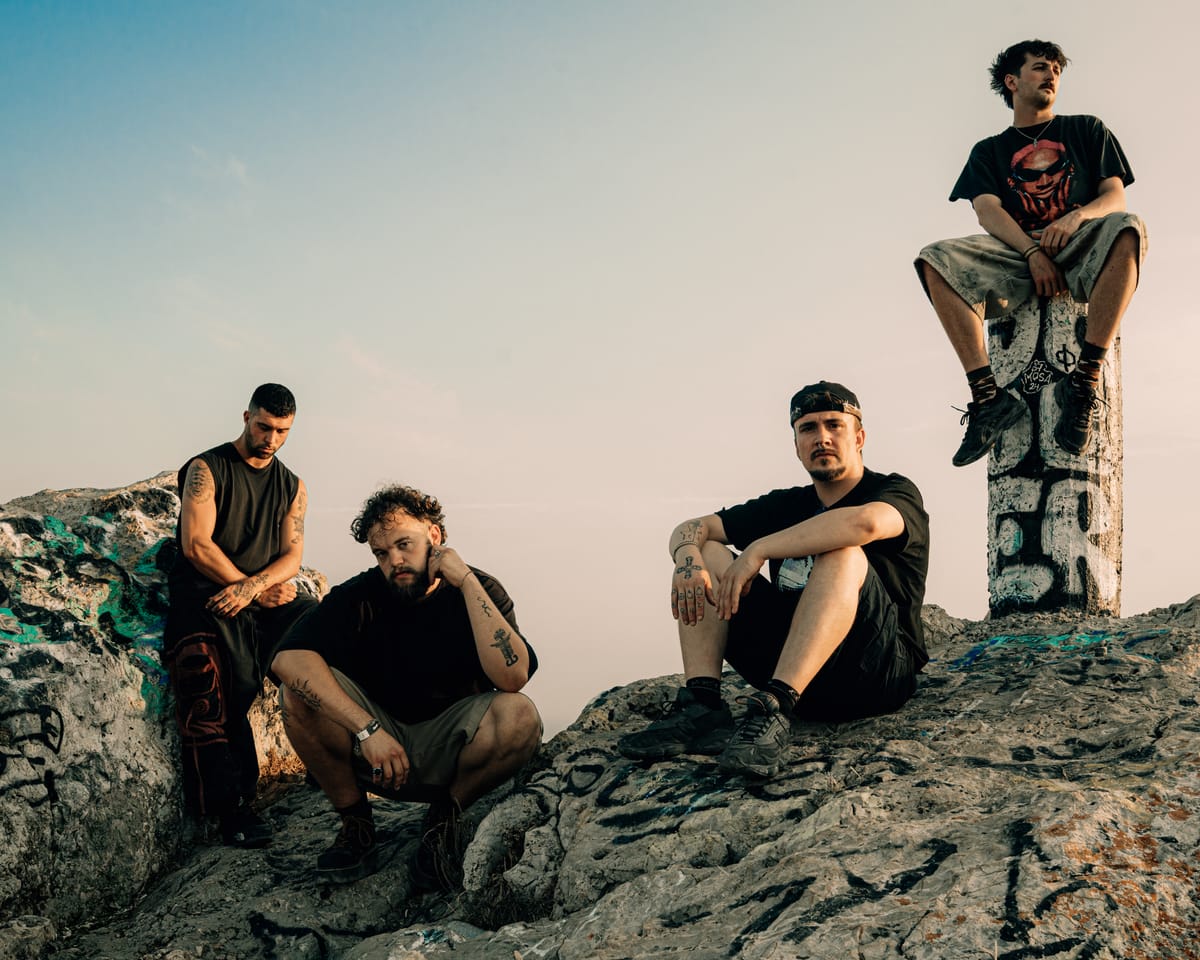
Milton Keynes Council backs its grassroots music venues
It might be roundly mocked for its strange American roads, but Milton Keynes does have a decent pull when it comes to grassroots venues. The local council has now stepped up and recognised the cultural power of its live music establishments, offering £40,000.
Perhaps the best known grassroots venue is the Crauford Arms, who'll be using support to fund a programme of live showcases for local talent.
Also receiving money are MK11, who are putting on a series of free entry gigs; Unit Nine, who are using it to power their FUTURE SOUNDS events, and The Stables. It's a great move affirming the value of local live music, and we hope to see more councils doing the same.
Donald Trump gets his hands in the Live Nation case
It's transpired that Donald Trump had a hand in getting a settlement in the Live Nation antitrust lawsuit. He reportedly pushed the US Department of Justice to reach a settlement with the concert giant which made the headlines earlier this month - not that everyone necessarily agrees. Over 30 US states have refused to sign up to the settlement agreement, believing that it does not go far enough to address monopoly concerns or lower prices.
As I outlined a couple of weeks ago, helpful reforms to Live Nation's structure have taken place, but the effect remains unknown. Who knows would could have happened if the lawsuit had continued - could we have seen the break-up of Live Nation and Ticketmaster? And if Kid Rock's still not pleased either, that says rather a lot.
 Emma Wilkes
Missy Dabice asks Spotify for a chat
What do you do when a streaming service churning out AI slop puts your band on a billboard? Mannequin Pussy's Missy Dabice handled it beautifully. As excited as she was to see her name - and uncensored band name - on a billboard celebrating women in punk on Spotify, she eloquently and gracefully took the opportunity to hold the streamer accountable and invited them to open up a dialogue.
"In the spirit of multiple things being true, I wouldn’t be the kind of ~woman in punk~ I am without also having something to say," she wrote on Instagram.
"Spotify - while I have your attention and in a few weeks where I’m told I’ve been invited into your house for a roundtable talk- I’d love to start having a real conversation with whoever I can at the company about what you plan to do about AI fraud on the platform, the proliferation of how non artists can take advantage of the lack of regulation on the platform and how they are contributing to the increased potential that music streaming sites such as yours are targets of cultural grifting.
"Just over the weekend a man in NC plead guilty to defrauding streaming services of over $10 million in royalties after he flooded the sites with thousands of slop songs and was able to amass 600,000 daily streams by using automated bots to artificially inflate the streams to over a BILLION PLAYS.
"How do we continue to make the service better for working artists and how do we continue to champion working artists beyond a billboard? I look forward to our conversation. This, plus many other areas of concern I have, is too big an issue for an IG caption but trust I’m looking forward to our conversation with questions and an open mind."

Artists Calling Out AI: On this week's podcast companion playlist powered by Qobuz, we feature artists who have spoken up or spoken out about the impact AI is having on music.
Legal action brings big wins for disabled festivalgoers
It's not just the US Department Of Justice levelling action against Live Nation - did you know that our Equality and Human Rights Commission did the same? This took place following media reports of accessibility issues at Wireless 2022 and Download 2023, which are operated by the Live Nation-owned promoter Festival Republic. Fans had reported problems being able to see the stage, a lack of accessible toilets, and having their disabilities questioned by event staff.
The EHRC then used its enforcement powers to enter a legally-binding Section 23 agreement with Live Nation and ensure it improved accessibility at its festivals.
The measures Live Nation took include improved accessibility guides for its festivals, compulsory organisation-wide disability awareness and inclusion training, introducing sensory calm spaces and distributing post-event surveys to fans for feedback.
Get ready for Together Against The Far Right
I've seen this protest all over my feed for the last few months, and if that translates into huge numbers, we're in for something extremely promising. The Together Against The Far Right march takes place in central London this weekend, starting at Park Lane at 12pm. Music is going to play a large role, with names like Leigh-Anne Pinnock, Fontaines DC, Paloma Faith, Paul Weller, Charlotte Church, Brian Eno and many other good eggs getting involved.