


The nights are long, the year is ending, and the once-yellowing grass is now carpeted with frost, but next summer is already taking shape. Every day, it seems, there’s another fresh festival line-up threatening to knock some digits off your bank balance. I should know – I spend this time of year writing news stories about them.
If you’re a regular festival goer, or even if there’s just one particular event you count down the days to return to, it’s a time of year that can bring bated breath and crossed fingers. It can be a roll of the dice as to whether a line-up is to your taste or not. Just like music itself, it’s subjective, and there can be a difference between a festival line-up that’s not to your taste and a line-up that’s an all-round failed throw.
In the last week, I’ve seen the internet split down the middle over two line-ups in particular. This year’s Manchester edition of Outbreak Festival was the most diverse yet controversial in its 15-year history, featuring “The Hayley Williams Show” headlining for two nights on the bounce and a line-up co-curated by Hayley Williams itself, with fewer traditional hardcore acts and wider-spanning alternative names including Wednesday, American Football and Julien Baker. Some were instantly hooked, others – especially Outbreak’s more traditional fans – feeling like the festival had changed beyond recognition.
A couple of days later, Glastonbury unveiled its line-up poster some months earlier than expected. It had the youngest headliners this side of the millennium, in the form of 33-year-old Sam Fender and Harry Styles and 25-year-old returning headliner Billie Eilish, while the rest of the bill leaned younger and more pop-heavy. The Instagram comments paint a divided picture, especially among older Glasto-goers feeling pushed out, or guitar fans feeling it was all a little anaemic with a limited offering for their tastes.
Neither of these are ‘bad’ bills, per se. The Outbreak line-up I love, and the Glasto line-up I appreciate but am relatively unmoved by. But viewed through a lens of objectivity rather than subjectivity, what makes a ‘good’ festival bill?
The crucial question is what a festival is for. Sure, it’s a weekend to dance with your friends, explore music, tick off bucket list bands and fill your head with memories, but every festival poster is a statement. What matters in music right now? Who do people want to see? It should hold up a mirror to what culture looks like, which obviously has commercial purposes as a means to promote an album, but there’s an element of artistic value to it too.
The relevant question to ask could be ‘Is it current?’, but not all festivals necessarily operate with that energy, so perhaps the better one is, ‘Is it relevant?’ Are you booking bands that feel of the moment, whether they’re breaking out or surging back into fashion, or milking the nostalgia cash cow?
Equally important is variety. What’s the use of booking the same bands that do the rounds every year, or the same sort of sounds? There’s an element of curation involved. What sort of vibe is the day going to have? How much choice is there of who to see at a particular time? And it goes without saying - if it’s mostly male and pale from top to bottom, it loses relevancy points. There’s something deeply retrograde about not taking heed of the genuinely meaningful calls for more people to see artists who look like them on festival stages.
There’s also an aspect of cultural responsibility too. The smaller stages of a festival can offer formative experiences for the heroes of the future to draw new fans in and develop how they perform. Festivals need to make the space to nurture that talent, especially those coming up through the grassroots. It’s why it felt like such a disappointment to see Reading and Leeds cut the BBC Introducing stage, and pad out its replacement stage, The Canopy, with nepo babies who may not need the boost. By contrast, the Cheltenham-based 2000trees has always been brilliant at building up new bands, booking them year after year, and creating a culture of what’s known as ‘Trees bands’ who the fans love just as much as they love the festival.
As the cultural landscape of music metamorphoses with the passing of time, perhaps festivals are bound to look different. A festival needs an identity, because it has to differentiate itself from every other event out there, but if it’s going to reflect what’s happening in music now, it has to evolve. There are gaps in the market to fill – in fact, I’ve heard it said that Reading and Leeds now fills the space the now-defunct V Festival took up, and now Download’s the new Reading and Leeds, and Bloodstock’s the new Download. By contrast, Glastonbury’s such a broad church that it could shift into whatever gear it wants in terms of the genre make-up of its poster without feeling off-brand, but not every festival has that luxury.
Festivals aren’t so different from artists in that regard. The best way artists can evolve is when they try something new but their new sound retains something of their essence. The same could be said of the decisions festivals make, especially the riskier ones. Julien Baker might not be your typical hardcore artist, for example, and could have been seen as too indie for Outbreak, but they’ve shown so much love for that realm – as shown by their collabs with Touché Amoré and Turnstile, that they felt like someone Outbreak would inevitably book.
The problem comes when a festival’s identity shifts in a way that doesn’t feel like it makes sense, or feels out of step with wider culture. It can feel like a betrayal of the people who fell in love with it in the first place because in some ways, it’s personal. Festivals become part of your identity too, especially if you consider music more than a passing interest but a way of life, an identity of its own.
Reading’s gradual rejection of the rock music it was founded on felt like a strange move given its health right now, even if it still puts on objectively good, relevant line-ups now (and books far, far more women in top slots than it did). Perhaps that’s why Outbreak diehards felt so strongly about how much space traditional hardcore occupies this year. Early in the 2020s, its line-ups felt like a who’s-who of the genre’s modern heavyweights, but it’s also had to expand its remit to avoid becoming stale and repetitive. There’s emo, shoegaze and a plethora of other things hardcore fans might also like, reflecting a world of more fluid playlisting, and in that, it’s generally been quite successful. Still, a festival’s roots will always matter, as much as the people who have come back again and again and helped it grow.
The climate for festivals now is challenging, least of all in a year where 45 independent festivals in the UK got postponed or cancelled as reported by the Association of Independent Festivals (AIF). The fortunate part is music is as vibrant and as thrilling as ever. There’s a huge, fertile pool of people to book. Sometimes, knowing a great festival is on the horizon is enough to keep the winter blues a little further away.
Track of the week
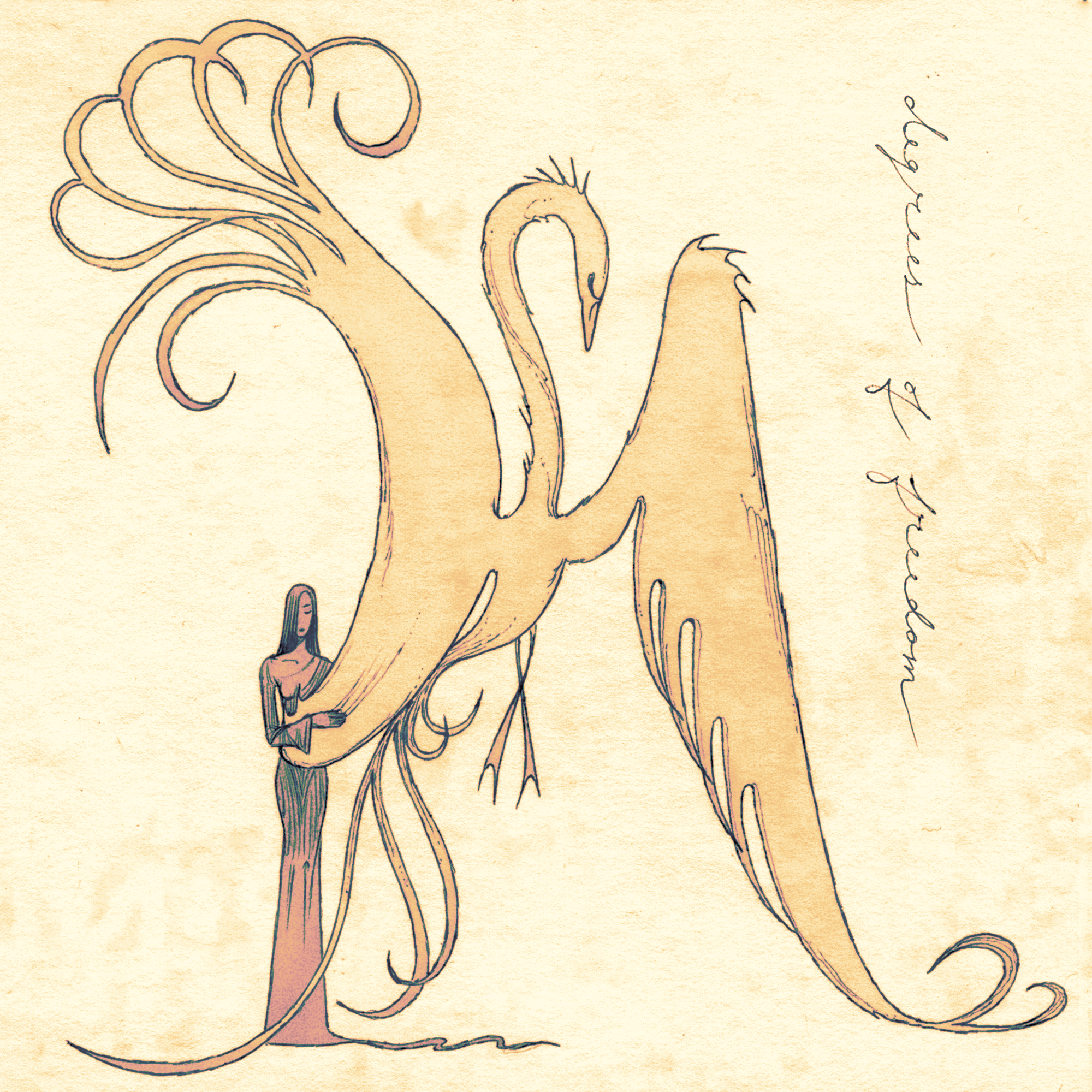
Degrees of Freedom - Mandrake Handshake
Released this morning, the krautrock epic is an ode to joy. The band - which waxes and wanes between seven and 10 members - has drawn comparisons to King Gizzard and Stereolab, and is named after a Brian Jonestown Massacre song. Check out this sprawling, psychedelic tune the minute you get a chance.
This week's podcast
Naomi in Blue: Why is one of 2026's best albums so hard to get heard?
Naomi in Blue's debut, Is This Body Mine?, is one of the best albums of 2026. Hear the British-Chilean songwriter and journalist talk to us.
Before you make your 2026 albums of the year list, listen to Is This Body Mine? It weaves together the political and the personal, and was recorded live in a Wiltshire barn. Helena Wadia and Sean Adams talk to Naomi about the record, her journalism, and 'La Cana', her first song with full lyrics in Spanish.
As a companion to this episode with Naomi in Blue, we've put a playlist together of protest songs. Featuring Sinéad O'Connor, Patti Smith and Massive Attack. Check out our playlist archive. Check out our playlist archive.