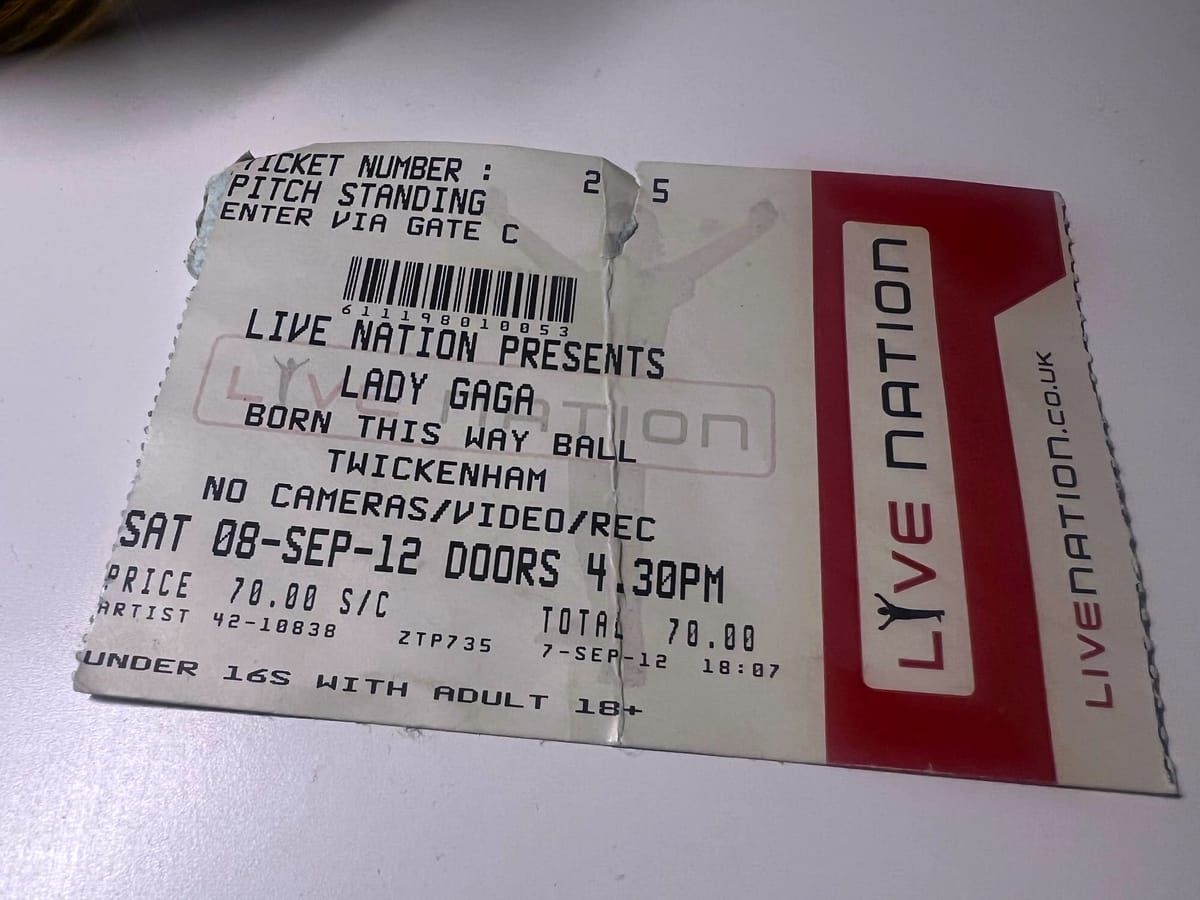
It’s safe to say the ticketing system works for almost nobody. Buying gig tickets is a thing to be endured, eroding both your patience and bank balance. As the issue has become more fraught, I’ve even known people say they were using up days of their annual leave to sit in virtual queues and battle janky technology in pursuit of breathing the same air as their favourite artist. (Who even is free at 10am on a Friday? And who decided that was a good time for tickets to go on sale anyway?) Worse still, the process is making a bigger hole in their bank accounts than ever.
It’s an industry wide problem, but in court recently, the US Department of Justice asked a pivotal question. Could the blame lay at the door of one company – or rather, two conjoined ones? Ticketmaster’s long been the whipping boy for frustrated gig-goers, but its market power is as great as it is because it and promoters Live Nation have been part of the same company for a decade and a half.
Indeed, Live Nation have now faced allegations of wielding and abusing monopoly power. It raises the question of whether fans get a raw deal buying tickets because of the structure of the ticketing market, and whether they are being exploited. But how did they end up in court - and what could the trial mean for music fans?
Who are Live Nation and what do they do?
Live Nation is so large and prolific that they’re practically inescapable. You’ve probably been to multiple shows promoted by Live Nation, even in grassroots venues, and you’ve also paid into their bank account whenever you’ve been to an O2 Academy venue as they own 51 per cent of parent company Academy Music Group. They’re in the pockets of major festivals such as Wireless, Latitude and Download, as well as summer gig series such as Live At The Piece Hall in Halifax.
Last year, it organised over 55,000 concerts worldwide and it also holds stakes in 460 venues.
Why do gig goers have a bone to pick with them?
It all started with the Swifties, multiple groups of whom clubbed together to sue Ticketmaster after the company’s haphazard sale of tickets to Taylor Swift’s ‘Eras’ tour in 2022. Many fans complained of lengthy wait times in the virtual queue, website outages and extremely inflated prices on resale sites even before the sale started.
The first class action lawsuit filed by Swifties at Los Angeles County District Court alleged the violation of two state laws - the California Cartwright Act and the California Unfair Competition Law. (The main complainant later dropped the suit). A second class action lawsuit filed at federal level made similar accusations and also claimed that Ticketmaster “intentionally and purposefully misled millions of fans into believing it would prevent bots and scalpers from participating in the presales”.
The controversy led to a hearing in the Senate in 2023, paving the way for the US Department of Justice to file an antitrust lawsuit against Live Nation in May 2024. The fiasco ended up being used as evidence in the trial.
How did Live Nation end up in court?
The Department of Justice accused Live Nation of being a monopoly and abusing its dominance over the ticketing market with the aim of stifling competition and consequently maintaining unnecessarily high pricing and surcharges for fans.
In an anti-trust hearing in Manhattan, it also faced accusations of mandating that artists use its concert promotion services if they want to perform at Live Nation-owned venues, as well as keeping its alleged monopoly power through threats and exclusive years-long contracts with major concert venues.
Going into the trial, there was talk that the most severe consequence possible was for Live Nation and Ticketmaster to be split up. The Association of Independent Festivals (AIF) had also called for this to happen, claiming they wildly exceeded “market dominance” of gigs.
According to their data, Live Nation controls 66.4 per cent of the market – a huge margin over the threshold for market dominance at 40 per cent.
Lawyer David E. Dahlquist, working for the Justice Department’s antitrust division, suggested in his argument that Ticketmaster’s technology is “held together by duct tape” because a lack of competition meant that Live Nation was unconcerned with making the site efficient enough to work smoothly.
Live Nation rejected those claims and said it didn’t hold monopoly power. Its lawyer David Marriott argued that it makes minimal profits, has never made threats and operates in a marketplace which is “more competitive than ever it has been before.”
“Live Nation and Ticketmaster are all about bringing joy to people’s lives,” said Marriott. “And doing it lawfully and doing it legitimately.”
Live Nation had also disputed the data from the AIF, having told NME that the AIF’s figures “overstated our ticket sales by 368 per cent, so any inferences drawn from this data about our market share aren’t credible and are likely to be misleading”.

Drowned in Sound is proud to be partnered with Qobuz, the pioneering high quality music streaming platform. Every week, we curate playlists on Qobuz featuring our favourite records and artists, and as a companion to the DiS podcast. Listen to our latest playlist and start your 30-day free trial.
What happened as a result of the trial – and what does it mean for music fans?
In a surprise move, Live Nation and the Department of Justice have tentatively reached a settlement.
Live Nation says they will now allow businesses to sell tickets via multiple vendors and artists can now hire other promoters while performing in its venues. They are also set to pay $280 million (£209 million) in damages to the nearly 40 states that were parties to the antitrust lawsuit. Live Nation and Ticketmaster continue to operate as the same company.
The other interesting consequence of the settlement relates to the fact that Live Nation controls around 78 per cent of “major amphitheatres” in the US. More than 10 of these will now have to be divested, giving the country more independent venues and lessening Live Nation’s market power.
However, lawyers for some of the states involved declined the settlement and want to continue pursuing the case against the company.
Tentatively speaking, this holds a fair degree of promise for live music fans. By the logic of basic economics, increased competition should drive down prices and improve technological innovation, with the knowledge that consumers could go somewhere else keeping companies on their toes. This is true regardless of the exact level of the market that Live Nation controls. An anonymous source told Politico:
“This will revolutionize the ticketing marketplace. These are innovative technological solutions to a very difficult problem with prying open the marketplace.”
The Department of Justice also said that they believed the trial will enact change.
"We're very excited about this settlement, because it basically opens up markets for other competitors, which will allow for competition that previously didn't exist in primary ticketing and in the live entertainment space," said the senior Justice Department official. "And what you're going to see there is that competition is going to have a direct impact on prices coming down. It'll also give consumers more options and not feel like they just have to go through Live Nation or Ticketmaster."
There’s also good news relating to those irritating service fees that get lumped onto the basket total at the checkout. At Live Nation’s venues, Ticketmaster now can only charge a maximum of 15 per cent of the value of the ticket as a service fee.
Of course, we are speaking theoretically at this point. Brian Berry, executive director of the Ticket Policy Forum, who spoke at a Senate Commerce Committee hearing on live concert and event fees, argued that the new measures didn't go far enough. In a statement, he said:
"It appears the DOJ has once again failed to protect live event fans and market competition with a settlement that will equate to less than a speed bump for the Live Nation-Ticketmaster monopoly. The only winners are Live Nation shareholders and the company's lobbyists.
""Live Nation doesn't win on technology or service, but rather through fear costing fans and competitors untold millions each year." He added that the fight against Live Nation's supposed monopoly is not over, as "we are confident many state attorneys general will stay the course to hold this market manipulator accountable."
Meanwhile, in the UK...
What hand do Live Nation have in the progress of the grassroots levy?
As we reported in January, the grassroots levy might well live or die in its current form based on Live Nation’s actions. While the Music Venue Trust CEO Mark Davyd praised its rivals like Kilimanjaro and AEG for cooperating, he condemned their lack of action thus far.
“These companies are delivering... Live Nation, you know, and the whole industry knows, you are not,” he said at the launch of the Music Venue Trust’s Annual Report. “If the voluntary levy fails, it will not be the fault of the companies who have already embraced it, or of Music Venue Trust, or of the government, or of any will to do it on behalf of individuals, artists, managers, agents, audiences or anyone else.
“It will be a direct consequence of the overwhelmingly dominant force in the arena and stadium market deciding not to deliver a voluntary levy. That’s your choice, Live Nation, and everyone in the industry hopes you make the right one."
There has, as we have previously noted in this newsletter, been some incremental progress. Tickets to Harry Styles’ ‘Together, Together’ residency at Wembley Stadium, which is being promoted by Live Nation, carry the £1 levy. The same can be said of levy pioneers Enter Shikari’s arena tour in November – notably, the first time they implemented it on their 2024 tour, they were working with AEG, not Live Nation.
We put the question to Live Nation about what more they are willing to do about implementing the levy more widely. At the time of publishing, they have not yet responded.
Related read
 Emma Wilkes
 Sean Adams