

I saw inside my friend’s car for the first time the other week and it was littered with CDs. They were scattered all over the seats as if a glass box full of them had broken and exploded over his car interior, and a neater collection lined his glove box. A copy of Bob Dylan’s Blonde On Blonde fell out when he opened one of the doors. This was how I learned he liked Bob Dylan, a change from his usual blend of hardcore and alternative hip-hop.
He’s 25, the same age as me, and far from the only person of our generation to have built up a hefty CD collection.
My 20-year-old sister Lydia is the same. In the stack of CDs piled up in her room are albums by Harry Styles, Olivia Rodrigo, Taylor Swift (lots of Taylor Swift), Gracie Abrams, Twenty One Pilots, Holly Humberstone et cetera. (She’s thrilled I’m mentioning this.)
“I don’t listen to them as much as I should,” she admits when I collar her from the next room. “It’s nice to listen to them as the artist intended – no breaks, no shuffle, et cetera. But I like having a physical representation of my favourite albums. They’re very important to me because I feel I make my favourite albums my personality.” Her three favourite albums of all time get pride of place on top of her bookshelf – Folklore by Taylor Swift, The Record by Boygenius and The 1975’s self titled debut. (She’s thrilled I’m quoting this.)
The only CDs I own myself is a collection I inherited from my uncle when he passed away four years ago. He had great taste – among his collection is everything from classic metal albums from Metallica and Faith No More to canonical indie like The Strokes and The White Stripes.
I’m less of a CD nerd, but I’m a different variety of nerd – I’m an iPod nerd. I still use iTunes. I’m a freak. (If I were going to start a proper physical collection of music, I would choose Compact Discs.)
Nonetheless, Lydia’s participating in the bigger trend, given that CD sales have surged by 16 per cent in the US in the first half of 2026, according to Luminate’s 2026 Midyear report, and have significantly outpaced the growth of vinyl.
It’s a change I was fully anticipating would circle back round. Luminate’s report attributes this partly to price. In terms of affordability and accessibility, it’s far cheaper to acquire a physical album on CD than vinyl, whilst cassettes might be cheap but who has a tape player?! Additionally, Compact Discs offer a cheaper form of merchandise than, say, comparatively expensive T-shirts or hoodies.
The report also points to the collectability of CDs, an export of Korean CD culture where multiple versions of K-pop albums are often sold with exclusive photocards, posters, books and other items, encouraging fans to buy several copies of the same record. A stack of CDs is a satisfying thing to observe, whether your own or other people’s. You get a snapshot of a person’s identity through looking at their collections, which is great for nosy parkers like me who are fascinated by what someone’s music or books could say about them.
Lydia suggests to me there’s a nostalgia factor at play too: “Do you remember the pink CD book Dad had?” she says. “I used to love flicking through that.” For my generation (reminder: Emma repeatedly reminds us she is "DiS years old" and we turned 25 last year - Ed), CDs were the format through which we experienced music for the first time, meaning those earliest experiences were tactile, affordable, and more three-dimensional than just hitting play on Spotify. There was a track sequence, liner notes, a lyric book – they were something we were probably bought for birthdays and Christmas. A CD has the 2000s stamped all over it. Not only is that in vogue, but it’s a small source of comfort.
In theory, the CD resurgence might look like a source of promise, if it’s a way of putting more money in artists’ pockets than the pittance they have from Spotify, as well as a means of giving the album its crown back. Couldn’t it also be a key pillar of the much-mooted analogue revival?
The reality isn’t quite as glorious as that, given that CDs are being collected and displayed and not played much in the same way as vinyl. Half of Gen Z and millennial consumers don’t own a CD player, after all, and technology has moved away from CD compatibility. Most modern cars, for example, don’t have one (nor do most laptops). In addition, Luminate’s report also illustrates that CDs don’t represent a threat to streaming, as streaming growth is still ongoing too.
There was always a danger that the analogue revival could become a hollow consumerist exercise that places aesthetic above purpose. Then again, the fact that young people still want to buy them even for display purposes does surely indicate a decently strong degree of reverence for the album as a format. They’re a declaration of music as identity, whether that’s an affirmation to oneself or an aesthetically pleasing photo for the grid. Music has always had that power and it’s not fading. That’s just one of a series of small rays of hope.
IN THE NEWS THIS WEEK
Evan Rachel Wood makes further allegations of narcissism towards Marilyn Manson
We've covered the allegations levelled against Marilyn Manson in considerable detail, including the lack of consequence it has had on his career. (Ironically, he releases a new album in just a few weeks). Evan Rachel Wood, his former partner, has now expanded further on what she perceives as Manson's narcissistic tendencies.
"If you take a wander in his library ... he had a lot of books on cults and a lot of books on mind control and manipulation. He also studied Scientology and things like that as well," she says in a new interview, which you can find embedded below.
"Cults have different names and different styles but ultimately they're the same tactics. I think he was very, very well-versed in these tactics.
"He also made it very clear that he would retaliate against anybody that went against him or, in his words 'betrayed' him in any way. And a betrayal would be to expose him. I think he was also very well-versed on what to do if that ever happened and how he would retaliate."
Wood says she has been to trauma therapy and learned to recognise narcissistic traits in people: "Really the thing that scared me the most was when I saw the mask go on. That's when I really knew.
"He was about to go do an interview and he was just on a tirade. One of, I call them his narcissistic rants, of just berating everybody. Whenever he had to get ready for some sort of event or interview when he had to put his persona, makeup and everything on – it was guaranteed that it was going to be a bad night for everybody.
"I locked myself in the bathroom. He was going off and he would wreck things. He would wreck the house and he would yell at people. I came out right before he was about to go on and he was just ... this darkness, these dark eyes. And you saw him slip into the Marilyn Manson persona and then he went out and he was doing that calm, well-spoken Marilyn Manson thing.
"And that's when I realised. That's when you go back and you think about every interview that he's done in that persona. You think 'Oh my God'. What was going on behind the scenes? Was it ever real? Because I just saw you put that face on and I know that's not you. I know that face only goes on when the cameras are rolling or when you're manipulating somebody.
"It blew my mind and I didn't know what to call that until I was learning about narcissism and psychopathy and they talk about the mask and when you see the mask slip. That's exactly what it felt like."
Manson has denied all allegations Wood has made against him.
And in other news...
- The artist Poppy was unable to go on stage at Upheaval Festival in Grand Rapids, Michigan, due to "hazardous" air quality caused by the Canadian wildfires over the border. Her band played without her in N95 masks. The irony is the day's headliners were Gojira, who are arguably one of the staunchest environmentalist voices in music, least of all in metal. When we say there is no music on a dead planet, this is what we mean.
- Live Nation may be facing a competition investigation in the UK. The Times reports that the Competition and Market Authority is contacting industry figures to arrange meetings and lay the groundwork for a potential probe. This follows up a report published in May by the House of Commons Business and Trade Committee, which described a "climate of fear" in the ticketing sector and recommended a full market investigation into live music before the end of 2026.n (A Live Nation spokesperson rejected the Committee’s conclusions and said the report "misrepresents the UK live music industry by relying on inaccurate data and unsupported conclusions."
- Liveline has re-opened applications for its latest round of funding. Developed by the Music Venue Trust in partnership with Save Our Scene, it's open to grassroots music venues, independent promoters, in-house venue programmers and artist representatives (including managers, booking agents and artists themselves). Coldplay have also helped to fund the initiative after donating 10 per cent of the proceeds from their 2025 Music of the Spheres UK stadium dates. Apply here.
Related reading
 Sean Adams
 Emma Wilkes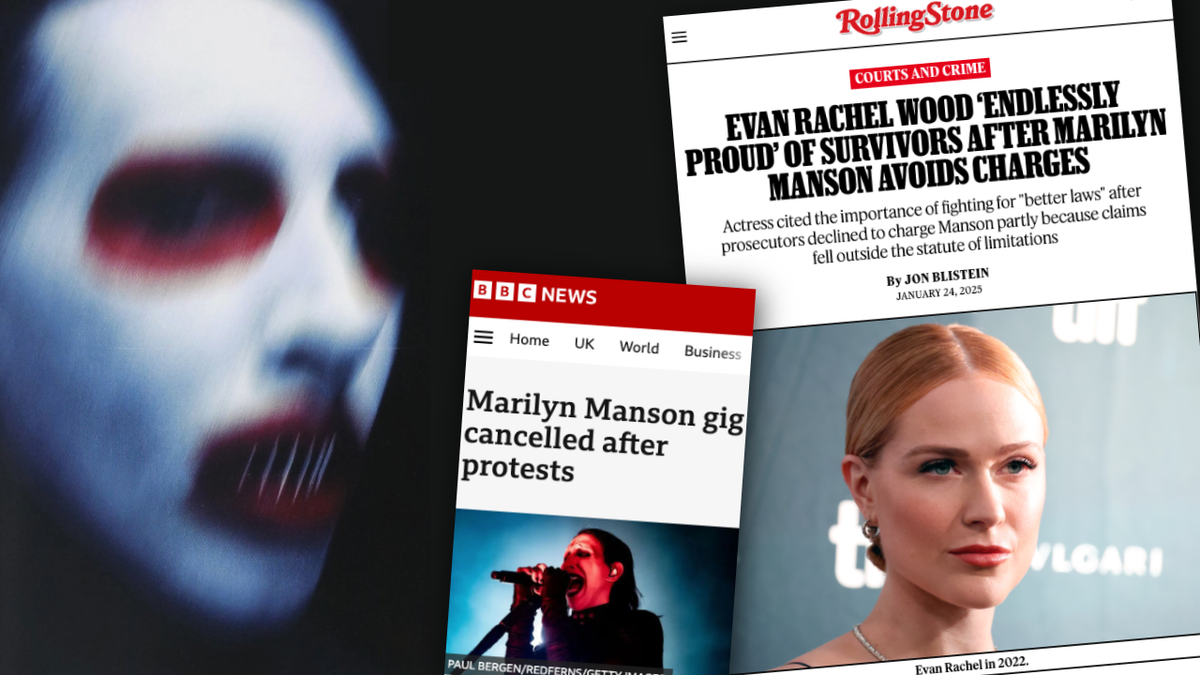
 Emma Wilkes