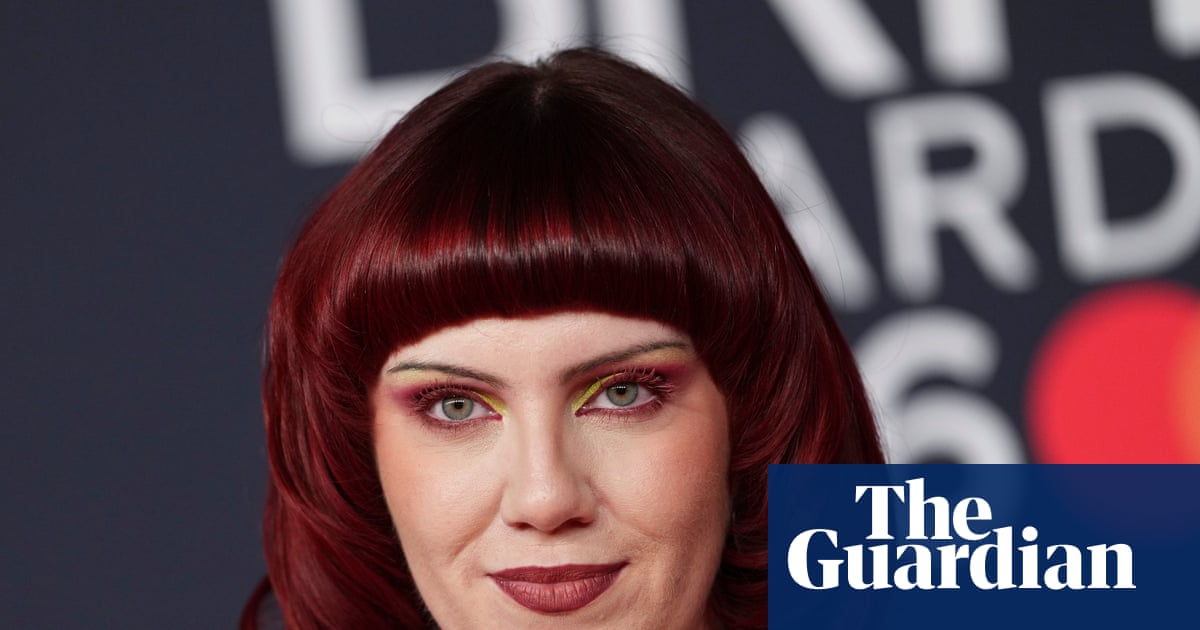
Like clockwork, some moments in the cultural calendar trigger the tedious "anti-woke" discourse. After Last Night of the Proms fury, comes Poppy rage (usually because someone took their jacket off), then its being angry about radio edits of 'Fairytale of New York', and then sometimes, if they have enough anger left, it's the annual politicians, Talk TV hosts, and Telegraph/Mail/Express columnists being strategically hypersensitive about a pop music awards show.
Last year, the BRITs ire was focused on Sabrina Carpenter's suggestive gestures. A few years ago it was something to do with Sam Smith's outfit, and before that it was the end of gendered award categories.
Yes, there was a moment, back when the UK's Culture Secretary Nadine Dorries was still a member of the Conservative party (before she inevitably joined Reform UK LTD) when the BRITs is "going woke" discourse was all about demise of the Best Female Artist and just having Best Artist. (Best Male Artist was also merged into one prize, but that didn't get much attention at the time).
Back then, if you were on the platform formerly known as Twitter, you'd either have seen grievance farmers worried about how the awards were either "rigged for women" or see a clip of someone on GB News getting very upset about the organisers changing things to be inclusive of non-binary artists.
Because inclusion is bad, for reasons.
To be clear, you have not misread that: ahead the 2022 awards, the smooshing together of the BRITs' male and female categories was denounced as "woke garbage" (hi, Piers!). Other culture warriors were very very very worried in 2023 when women and girls didn't get a look in the shortlist of 5 artists (notably, it's now 10 acts), whilst some members of the so-called manosphere got upset one year about the sidelining of men...
Meanwhile, most of us just wondered what the opposite of being awake to injustice is whilst feeling a bit old when we hadn't heard "of" Tate Mcrae.
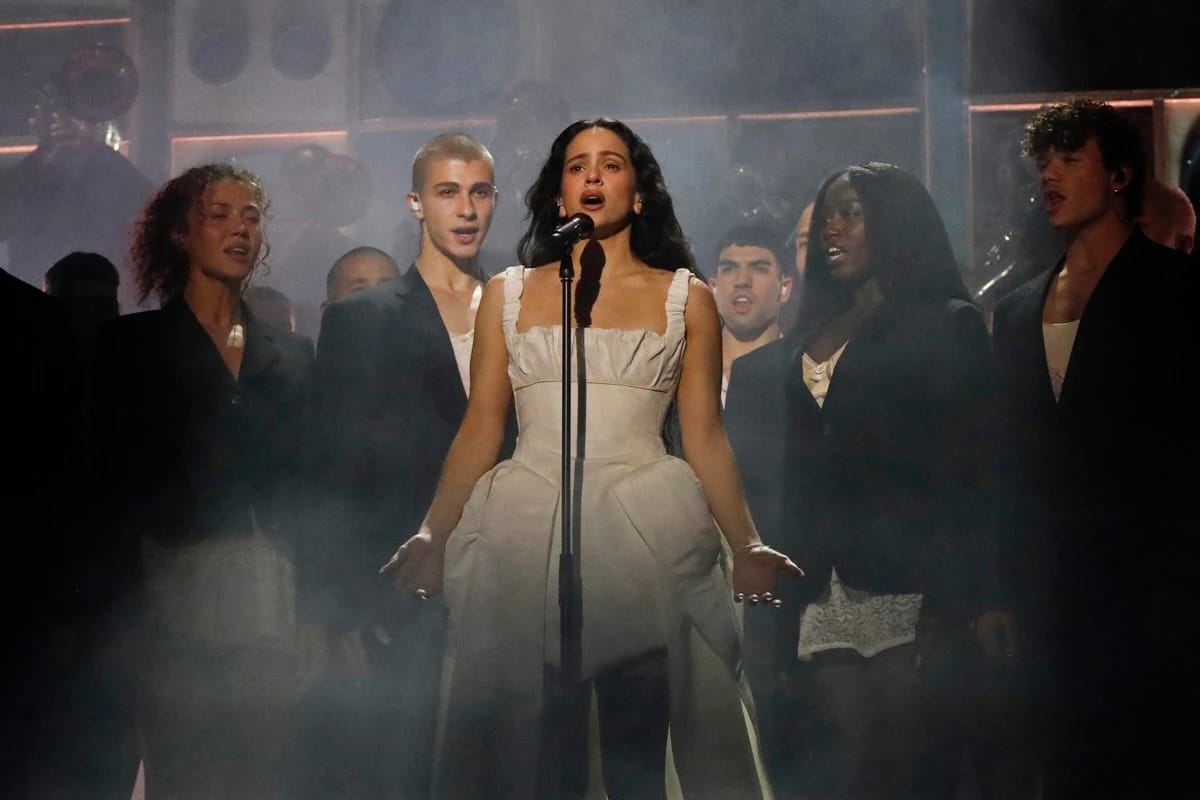
And yet this year, Olivia Dean won four awards. Charli XCX won five last year. Raye won a record six the year before. Then there were the incredible performances at this year's awards shindig, including Dua Lipa being joining Mark Ronson and an incredible performance from ROSALÍA with the most special of special guest: BJÖRK!
Can you hear that? Me either. The pearl-clutchers - whose Tommy Robinson endorsed candidate lost to a lovely seeming Green party plumber in last week's by-election that took place not far from this year's BRITs - are oh-so silent.
Maybe world war three was a bit of a distraction from the annual ragebait. Or maybe they're waiting for someone to tell them which pop star they should be furious about for 6-12 hours and file an Ofcom complaint against.
Anyway, I love a good stat and have been learning how to visualise data, so I spent my Sunday having a proper dig into the numbers. Predictably, the data tells a completely different story to the one the culture warriors were fearful of.
What the numbers show isn't some diversity programme run amok, nor POLITICAL CORRECTNESS GONE MAD(!!!!!) but a decades-long correction after decades of inequality (or at least an odd misrepresentation of things, especially when the Spice Girls don't win best group).
ICYMI, Emma Wilkes wrote a long read a few weeks ago about why women keep winning, but there's still a lot of work to do but some of this data does how some progress. Let's hope it's not a blip.
Before we get into it, here are 3 great BRITs 2026 performances
Despite 5 male headline acts to 4 female, women dominated the standout moments. Björk joined Rosalía for one of the night's most striking sets. HUNTR/X made history as the first K-pop group to perform at the BRITs.
This year's performers are part of a shift in who takes the stage at the annual televised celebration of the UK music industry...
2026's 50% female-involved lineup is above the 40-year average of ~39% — but it's the 2020s as a whole that mark the real shift. Women have shared or dominated the BRITs stage for five consecutive years. That's new.
What actually happened in 2026
Women won a lot. The full picture is little more nuanced than simple headlines suggests but in short: the competitive awards skewed female whilst the honorary awards skewed male. The genre breakdown is more uneven still.
The competitive solo awards lean heavily towards women — but groups and legacy categories tell a different story. Women have won British Group of the Year just 3 times in 50 years: Little Mix in 2021, Wolf Alice in 2022, Wolf Alice again in 2026. And 3 of the 4 honorary awards went to men.
It wasn't always like this
The Album of the Year award has been running since 1977. For most of that time, it was essentially a men-only club. The graphic below shows every winner across 46 years (excluding 78-81 when the awards didn't happen). The three eras tell the whole story.
This is not an accident. The same award. The same criteria. The same industry. What changed is who gets to vote — and who gets to make music worth voting for.
Who decided
Culture warriors rant and rave but what they won't tell you is that the awards haven't changed because of a quota system. They've evolved the pool of who votes. The Voting Academy, that's the 1,200ish industry figures who decide most categories, looks dramatically different to how it did in 2016.
A decade ago, 7 in 10 voters were male. Today the academy is near gender parity. That same period saw 4 of 5 Artist of the Year winners be women. The culture war crowd calls this "woke." The data calls it correlation.
Before victory's declared
None of this is a clean win. The nomination breakdown by genre shows how uneven representation actually is. Pop is all women. Hip-Hop is 80% men. International solo acts are 80% women; International groups are 60% men. The revolution, such as it is, has very specific borders.
Pop is 100% women. Hip-Hop is 80% men. International Artist is 80% women — International Group is 60% men. The genre silos and the solo/collective split tell a more complicated story than the headline numbers.
What the culture war ignores entirely
All of this culture-war noise focuses on the most visible categories i.e. the ones with famous names and red-carpet moments. Behind the scenes, the picture is almost entirely different. Of the 49 times the Producer of the Year award has been given, 48 went to men. One woman, PinkPantheress, this year, has ever won it.
Producer of
the Year
The biggest culture-war claims are about the most visible categories. Behind the scenes, the industry remains overwhelmingly male. One female producer winner in 49 years isn't a sign of reverse discrimination — it's a sign of how much further there is to go.
TL;DR - The right-wing outrage about women winning BRITs isn't protecting women when it sparks outrage. And women will keep winning, regardless.
Read Emma Wilkes' full investigation
 Emma Wilkes
Related Read
 Robyn Vinter