
The day Donald Trump was re-elected, I asked myself what I would do if abortion was ever banned in the UK. Chances are, because I’m positive I don’t want children, I would get sterilised. I don’t want to undergo such an invasive procedure, but that to me would be far preferable to the hormone-addled tornado of pregnancy for nine months and a painful childbirth, all for a baby I wouldn’t want to keep. (It would also be inadvisable with another health condition that I have).
I should not be asking myself this question. I wonder how many other women and uterus havers have done the same. In the 18 months since, existing as a woman has become even more frightening, even just in the last few months. Some of the news cycle's biggest talking points have been deeply rooted in misogyny - the Epstein files, Louis Theroux's manosphere documentary, most recently the revelation by CNN that an academy for men to learn how to sexually violate women had clocked up 62 million visits.
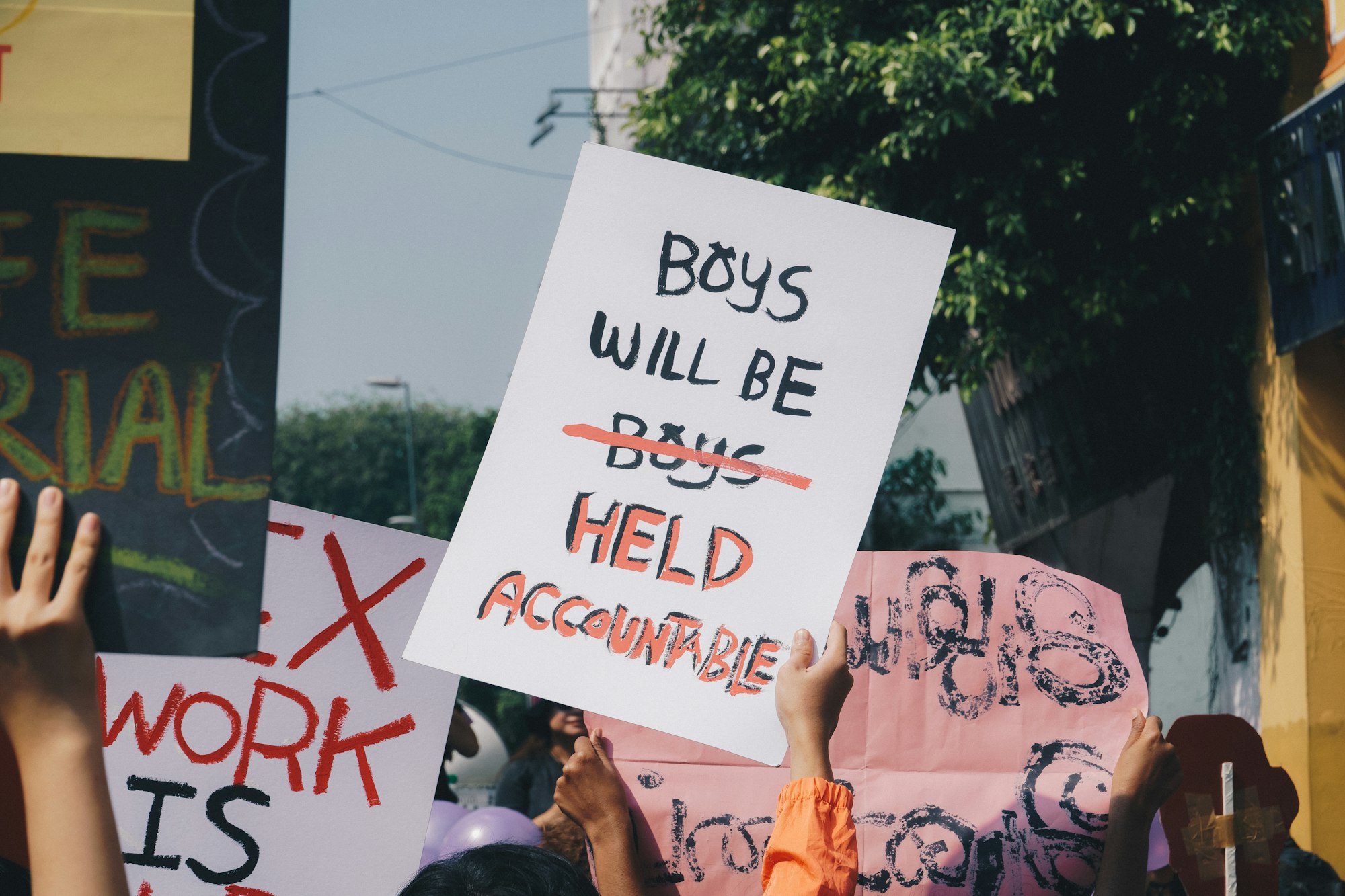
We are furious. We are scared. To say both feel like understatements. Decades of struggle to assert ourselves and be considered equal and we still must endure this.
At least the women releasing their fury into our speakers and headphones understand this. They might be separated from us by stages and platforms and fame but they are still us. Thank God for them for saying what we’re thinking and teaching us that it’s not just okay, but it’s vital, to take up space and unleash the anger, the largest and most energetic of all emotions, building up in our systems.
Sometimes this anger is personal – I’m a woman who likes guitars, of course I’ve raged to Alanis Morrissette’s ‘You Oughta Know’ when men have let me down. Nowadays, that anger is channeled into music that will soundtrack protests, boycotts and displays of solidarity as we fight back against the erosion of rights and the far-right’s imposition in our politics.
I never used to like classifying this as ‘female rage’. Anyone facing this would be angry, so why must it be gendered? Perhaps it was after I saw a male journalist use it and the significance of it altered, almost like it was patronizing. Once I realised this, my stance softened.
We deserve to be able to say we feel rage specific to our experience as we move through a world not designed for us. If anything, 'feminine rage' is the less used but better term, one I like to think is more inclusive as it relates to gender expression instead of sex. It also happens to be the stuff of great music.
We’re going to get a cascade of songs about the collective incandescence we as women feel about the world, whether relating to misogyny or other equally heinous matters. A few weeks ago, for example, I nominated Lambrini Girls’ ‘Cult Of Celebrity’, about the Epstein files, as Track Of The Week. Sprints’ new single ‘Trickle Down’ was tantamount to a glance into a ravine – “They’re calling it free speech, it’s free hate, racism disguised as nationalism… oh and did I forget that we're destroying the environment and the fucking world is gonna end?”
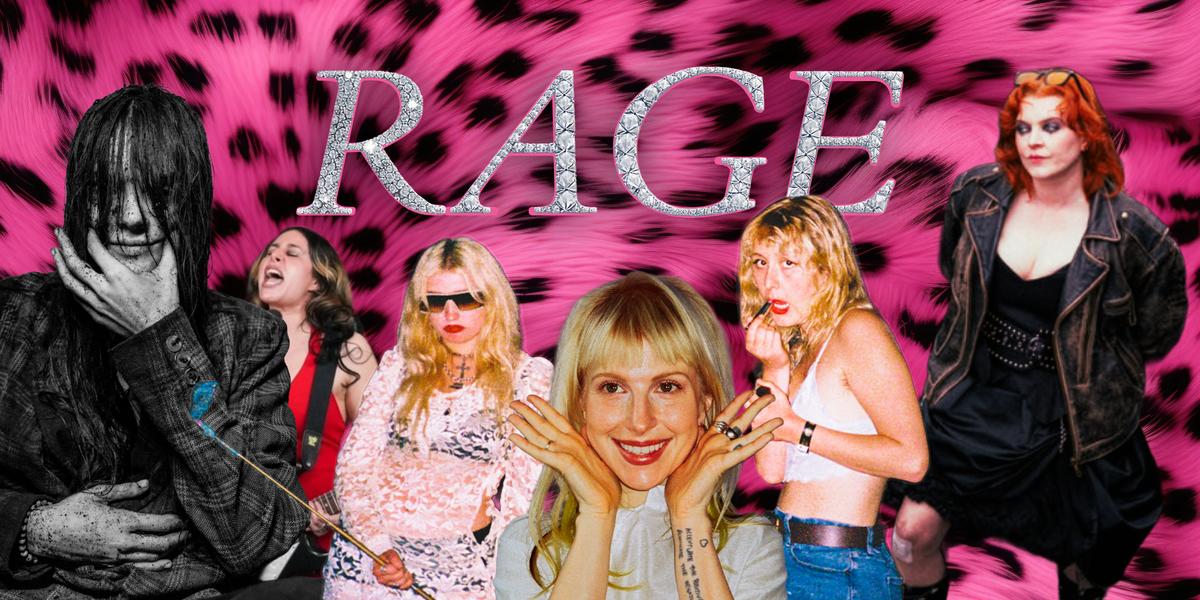
There'll be new names pushing through from the underground whose political songwriting is already resonating with listeners. YAKKIE's debut album Kill The Cop Inside Your Head is stacked with anthems of resistance tackling femicide, whitewashed liberal feminism and internalised oppression with a golden streak of hope. In a darker contrast, Canadian punks PISS' 'live under oak street bridge' session is soul-shaking in its aggression, interspersed with samples including Andrea Dworkin speaking about the violent misogyny of pornography. "I wanted a way out of my body/To disguise the scent that drew them out," howls vocalist Taylor Zantingh in a tone of wild desperation.
There’s even more where they came from. Both of those bands are destined to be looked back on as vital voices soundtracking this period. See also, Mannequin Pussy, Canadian ‘riot-gazers’ Softcult (who play a shoegaze-inflected take on riot grrrl), doom-punks Witch Fever, Die Spitz, Sofia Isella, Amyl and the Sniffers (‘Knifey’ might be the most devastating feminist song I know). Hayley Williams’ musical output is more political than it ever has been. Sometimes their rage is political, sometimes there are softer, more personal moments, but these are women who are unafraid to engage with the world around them and call out its wrongs for what they are.
Why does this matter if it’s ‘just music’? Firstly, it’s solace. It reminds us we’re not crazy. Secondly, it’s a reminder that music is freedom, free from the constraints of judgment and tone policing, where women don’t have to seek permission to be as angry as they feel. Perhaps it’s one of the only outlets we have where women can be angry and not be patronised for it or gaslit about it.
Under patriarchy, an emotion as loud and powerful as anger is not a woman’s domain, and our anger still isn’t taken seriously. A 2025 article from the New Statesman examining the progressive streak among young women in the UK notes that “there is still a prevailing sense that whatever young women are thinking and feeling, it doesn’t matter very much.” It outlines the unhappiness this group feels towards their country, revealing that they are the most pessimistic about the economy and are more likely to say their country is treating them unfairly compared to previous generations. They feel less connected to their country and are more likely than their male counterparts to think the UK is racist.
It’s said that young women are “radicalising”, but are we really? We want economic security, our rights to be protected, not eroded - or pitted against those of trans people - climate justice, racial justice, accessibility and fairness. All in all, we don’t want to function within a broken system that doesn’t actually serve us. Radical? Not exactly.
I see this being treated with hand-wringing instead of concern. In fact, I even suspect there’s an undertone of fear to it from people who don’t want to see the systems we live in toppled. In fact, Rowan Pelling’s piece in The Telegraph tries to posit that “angry leftie women” present a concern as much as radicalised men do – “It seems that for every male who’s found his mentor in Andrew Tate or the late Charlie Kirk, there’s a young woman who’s been radicalised by Greta Thunberg and Alexandra Ocasio-Cortez.” Comparing one of the most powerful climate activists (and a tremendous advocate for Palestine) to a man peddling extreme misogynist ideology is painfully invalid when the former’s perspective is not only hardly that outlandish but is founded in actual science.
Though Pelling writes that she does have some sympathy post-Epstein files and the murder of Sarah Everard in 2021, there’s derision instead of sympathy for women. “If an increasing number of educated young women feel hopeless about the world’s future, hostile towards men, intend to spurn relationships (let alone marriage), declare themselves non-binary and don’t want to have children… then we’re all up Faeces Creek without a paddle.”
Half of the items on this list wouldn’t exactly cause society to collapse, not least when it’s so retrograde to consider marriage and children as obligations to society rather than individual choices. But if you see hopelessness and anger, why aren’t you asking why those sentiments exist in the first place? Why don’t you treat the dossier of evidence we have with the consideration it deserves?
Amid the existing pain of the modern struggle the women of my generation has, there’s a difficulty just to be listened to. There’s a rush to protect male emotions when we speak of our bad experiences with them than to consider the extent of our own injury.
Lambrini Girls vocalist Phoebe Lunny put it best in her brilliant A View From The Bridge video: “It’s 2026 and women are still having to scream at the top of their lungs. One out of three women have been sexually assaulted or will be sexually assaulted in their lifetimes, and we’re all focusing and centering the men still."
Songs understand us even when the wider world doesn't. At shows, we're stood shoulder to shoulder with people who have experienced what we've experienced and believe what we believe. Those spaces offer us a means of feeling sane, not to mention a vital means of community building. They bring connection and joy, and perhaps most importantly of all, catharsis.
That feeling was exemplified by Mannequin Pussy's recent Tiny Desk session for NPR, in which vocalist Missy Dabice emphasised the necessity of feeling and releasing anger - especially when she led the NPR office in a cathartic primal scream.
"Your rage is a part of you and you have to honor it. Give it the space to breathe," she said.
She hears us. If only the rest of society would catch up.
Related reads
 Nina Cresswell
 Emma Wilkes