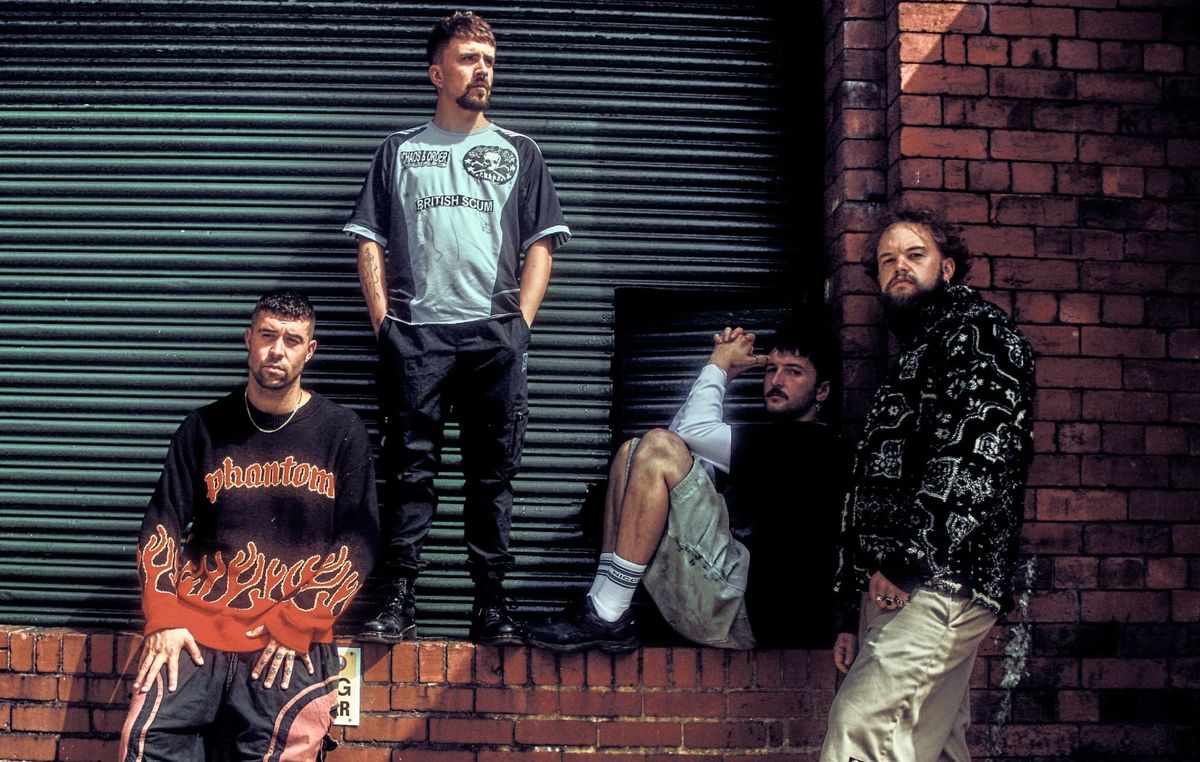
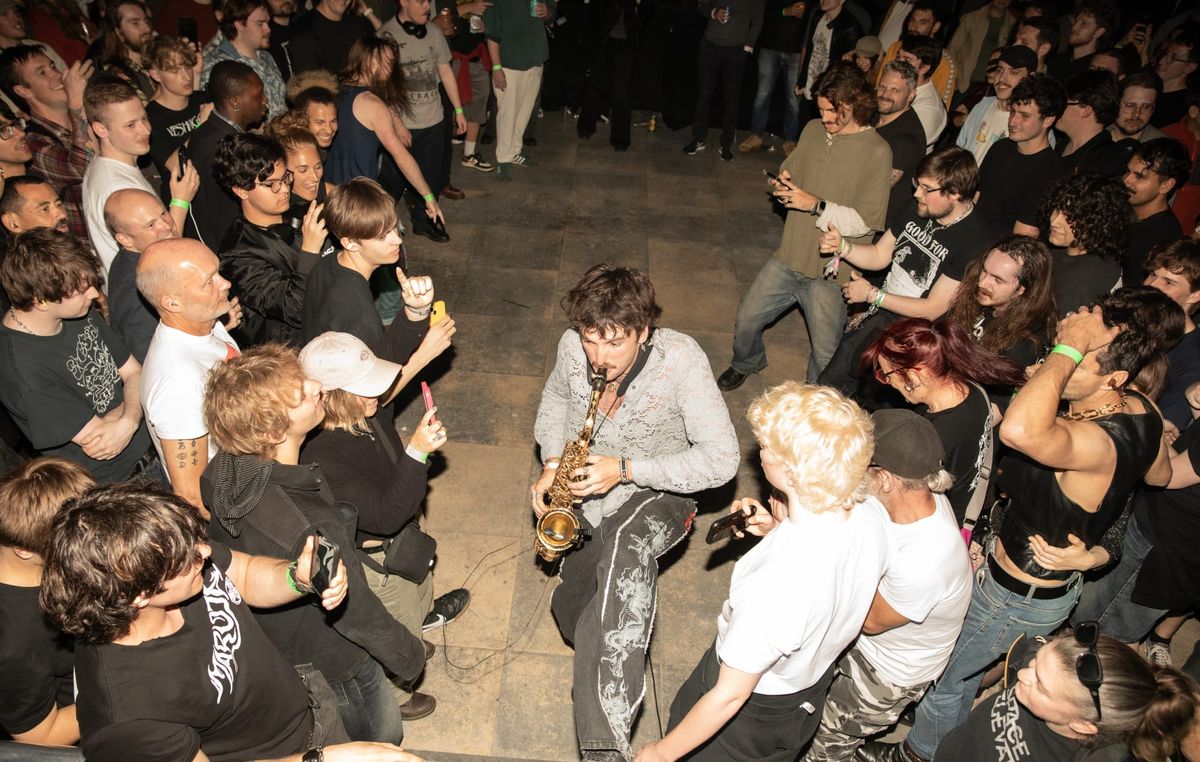
There’s a new kind of noise blaring from the side streets of Dalston, east London. It’s where the beating heart of Bulletproof Festival can be found, a festival affiliated with Jeremy Corbyn’s Peace & Justice Project and Music For The Many campaign that champions community-building, resistance and independent music. EartH Hackney and the venues that surround it – The Victoria, The Shacklewell Arms and The Jago – have become a broad church, welcoming in everyone from Hackney hipsters in corduroy jackets and caps to punks in bright red tartan. And, of course, it takes us less than ten minutes upon arrival on Thursday to see someone in a keffiyeh.
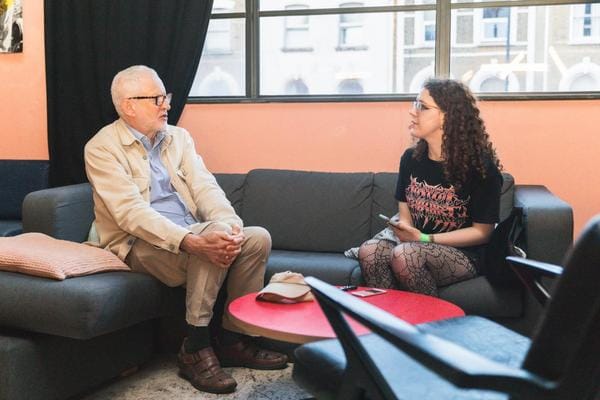
There’s a spirit of collectivism but it’s not confined to the audience. In fact, it’s one of the chief things Jeremy Corbyn has noticed as he’s been taking in the sights of the festival, both on stage and away from it.
“What's interesting is chatting to the bands, either up here or downstairs, is that they're all creative, innovative and clearly good friends with each other,” he explains in the EartH green room. “I haven't noticed tensions and competition within or between bands, which is not the public image of the music industry. I'm not saying there isn't a cut-throat element to it - there absolutely is – but what we're trying to do here is give a chance to young musicians to perform. We've already hosted around 100 bands in the many concerts that Music for the Many has done and there's two questions this begs:
“One is, as a society, we don't value music enough,” he continues. “We allow too many live music venues just to go under. Local authorities are not assiduous enough in protecting live music venues or understanding music economy. The other side of it is the question of money. We just chatted about this before we started the interview, that none of these bands are making any money, they are all making enormous sacrifices.
“The very least we can do is first of all make sure the venues are there, as I've said. The other one is look at countries that are trying to help artistic endeavor, Ireland, France, Netherlands, where they pay a basic living wage to artists of all sorts. I see nothing wrong in that. Artists are creative, they strengthen our society, they inspire young people, they entertain older people. What's wrong with supporting them?”
This is what Jeremy Corbyn has taken away from Bulletproof – but what have we learned?
You can – and should – book festivals differently from the norm
Festivals are a vital part of the music industry calendar, especially for younger bands as a chance to build experience, connect with their peers and draw in new fans. The cultural capital they have, particularly large-scale events, is huge. Every year, the discourse about the diversity of those bills returns, practically becoming an annual event as fans ask why women and people of colour face a glass ceiling on the posters, never to have their artist name rise above a certain font size. Heritage artists get rotated around from festival to festival, with a shortage of investment in taking risks and moulding headliners of the future.
Bulletproof exists to serve as an antidote to this. It felt especially significant, albeit rare, that there were not one, but two bands prominently featuring women headlining? (Take a bow, Sprints and Pussy Riot: Riot Days), but that diversity extended all the way down the bill.
“One thing we wanted to achieve with Bulletproof was to build a festival that was a real representation of society and the communities that are united through their love of music and creativity. I’m so proud that our bill is so diverse in terms of its gender balance, LGBTQ+ representation and working class backgrounds,” says organiser Samuel Sweek.
“We set out to prove that things could be different, and they can be if there’s a will for promoters to make bold choices and take a chance on up-and-coming artists. I don’t mean to sound grandiose but music is so often a commentary on society, our lives, our worries, fears, love and so much more — and festival line-ups should be representative of that. Bulletproof is, and the response it has received is genuinely so warming.”
Resistance doesn’t have a singular sound
The archetypical image of political music involves a four-piece set up – vocals, guitar, bass, drums - thick riffs, barked vocals, sloganeering et cetera. There was a proud, punk core to the line-up, of course, but what was just as significant was the diversity of sound. Electronic-leaning rock music had pride of place - the immersive, ribcage-shaking vibrations of YARD proved popular, for example, while CLT DRP’s earthquake-like electro-punk offered a thrillingly intense version of the Friday night dancefloor sound. Some acts sounded completely distinct from anything else in the bill – see Speit’s emotive spoken-word and Blossom Calderone’s elegant, jazz-inflected songwriting. Who said a festival had to stay in just one lane, anyway?
Everyone’s got their own message to bring
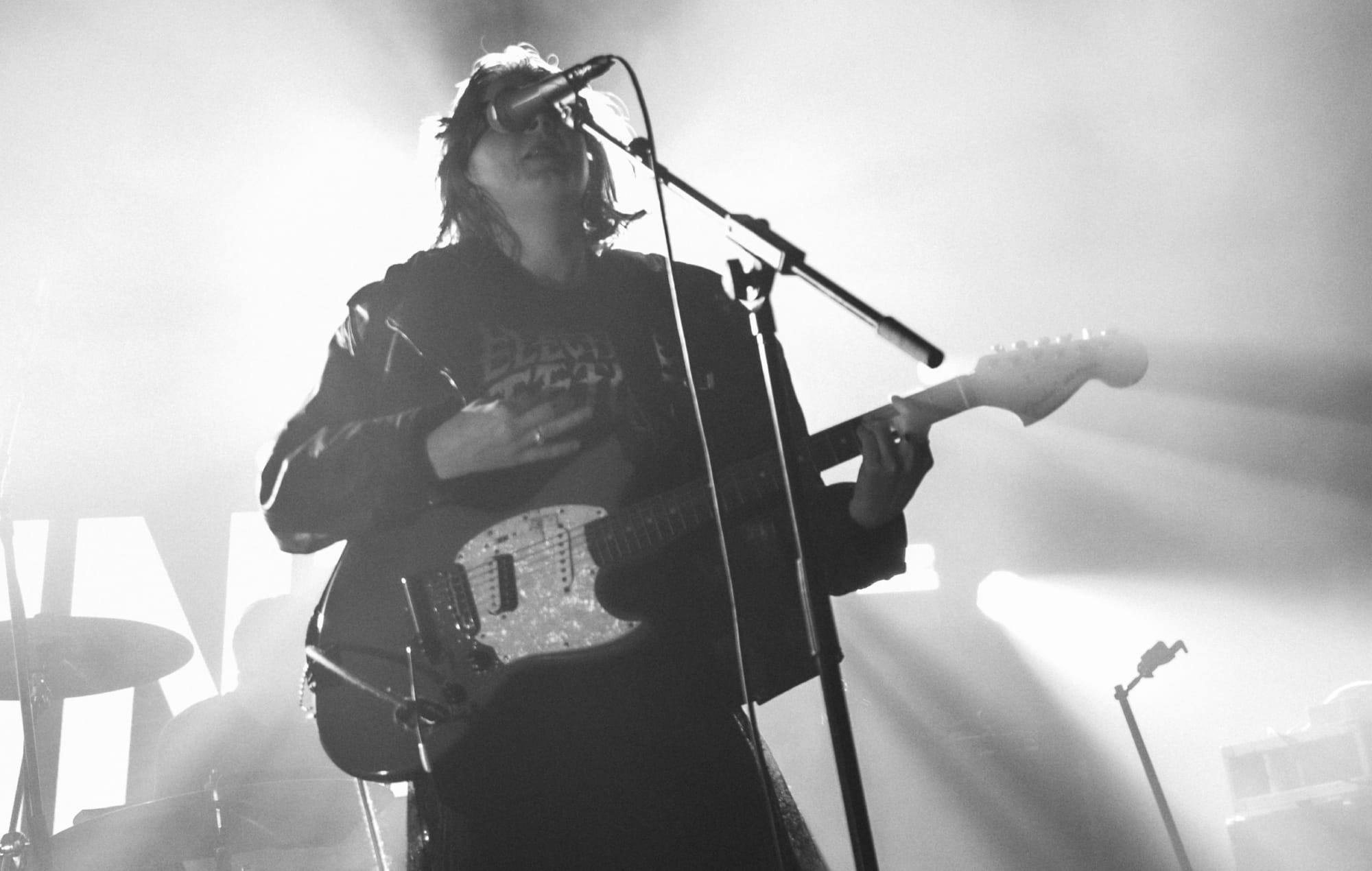
Bucking the tide of rising censorship in the world at large, Bulletproof was a platform in which everyone could convey the messages they needed society to hear. The plight of grassroots venues was an inevitable talking point - “So many lives would be worse off without these spaces,” said CQ Wrestling’s Charlie Woods – as was Palestine, but there was a huge range of topics brought to the table. King No-One’s Zach Lount spoke powerfully about the need for the left to “stop cannibalising each other” at “the most critical point in British politics in my entire lifetime”, calling for unity and to “celebrate the things that we share”.
Then, there was Jools co-vocalist Kate Price’s breathtaking speech on misogyny. “I want you to feel rage,” she seethed, “that women can't come to gigs and festivals like this one without fear someone will slip something in their drink or that someone will touch them where they don't want to be touched… society should count itself very, very lucky that women like me want equality and not revenge.”
Music is a window to the world outside – and it can’t be separated from politics
There’s often a beautiful sense of escapism to a music festival, but in the age of the polycrisis, the turbulence of the world outside can never be truly shut out altogether. Bulletproof paid respect to this by inviting Jordan Devlin of the Filton 25 to speak about the horror of the conditions the group have been put through while awaiting trial for their raid on the Elbit Systems factory in Bristol in August 2024 in which they destroyed Israeli weapons. (Devlin himself was acquitted of aggravated burglary earlier this year along with five of his codefendants).
“I broke into Elbit Systems and smashed up some drones. Somebody has to do it, right?” he quipped. Later, his words took on a far darker tone. “I was hit in the face with a sledgehammer… I was also ravaged by the British legal system. Our whole trial was a show trial… even our lawyers were barred from speaking.” He also warned of the swing towards authoritarianism that the Filton 25’s case represented. "The state is massively overreaching its power,” he said, adding that “the thing that you love will be next.”
Despite the bleakness of the world, we still have amazing live music
Though created from and responding to troubling circumstances in the world and music industry at large, Bulletproof proved that joy is still an act of resistance. There was plenty of joy to be found in just how incredible some of these performances were, with a quality that remained consistent from the bottom of the bill to the top.
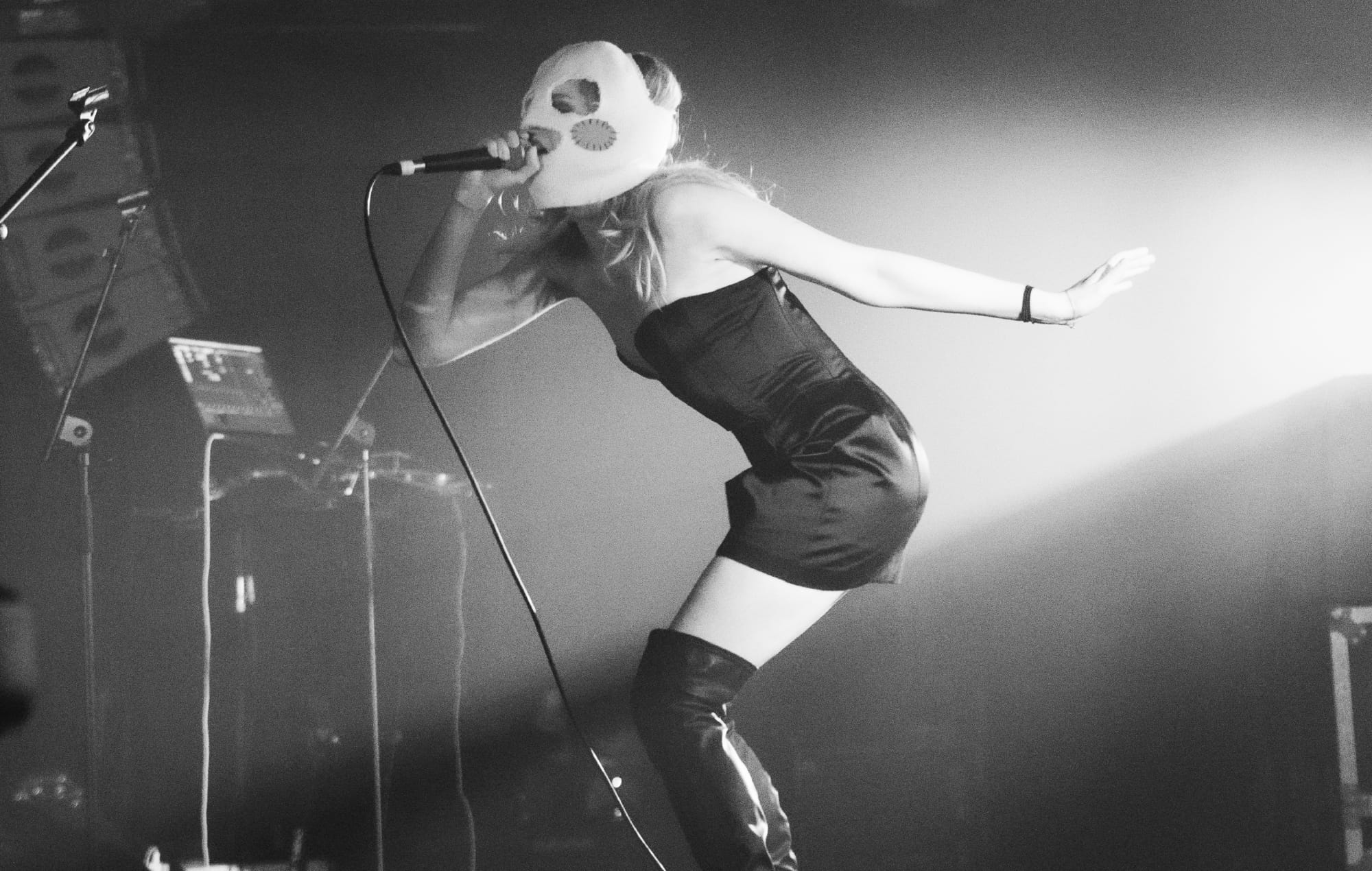
Even the early starters like Dead Air, Sunday Best and Hongza went beyond just showing potential, feeling like fully-fledged, crowd-pleasing performers already. Snayx and Jools in particular got the air crackling with amped-up enthusiasm on Saturday, even when Jools’ co-vocalist Mitch Gordon was saddled with both crutches and a knee brace. (Quite frankly, nobody’s ever made crutches look more punk). All three headliners brought both brilliance and something individual to the table, whether it was Sprints’ sense of caustic cool, Pussy Riot’s hypnotic punk theatre or the shapeshifting, spiritual drama of Maruja. What a weekend it was.
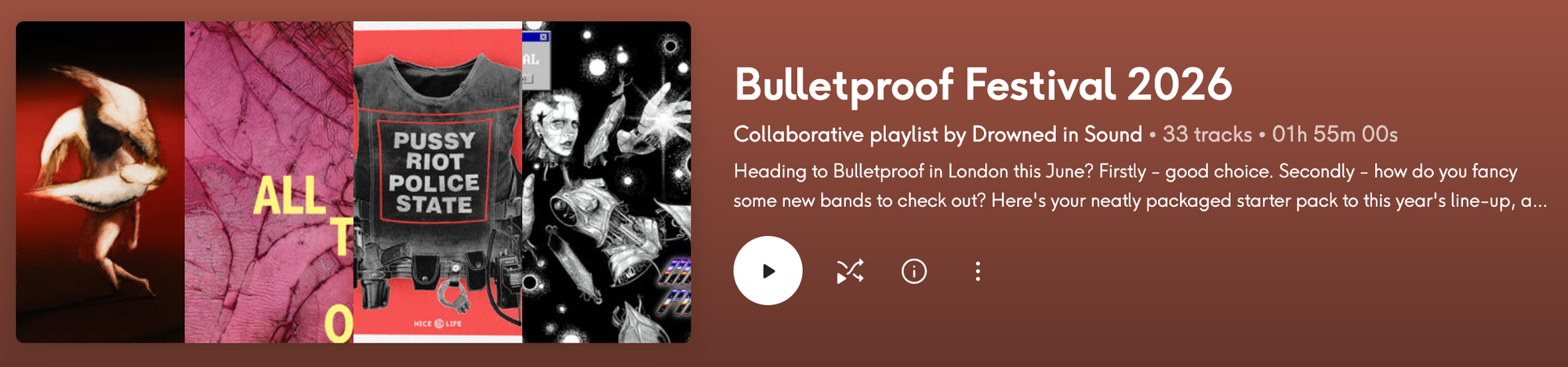
Listen to all the acts that played Bulletproof Festival with this DiS playlist powered by Qobuz - our music streaming platform of choice. Browse our playlist archive for more!
Related reading
 Sean Adams
 Emma Wilkes
 Emma Wilkes