

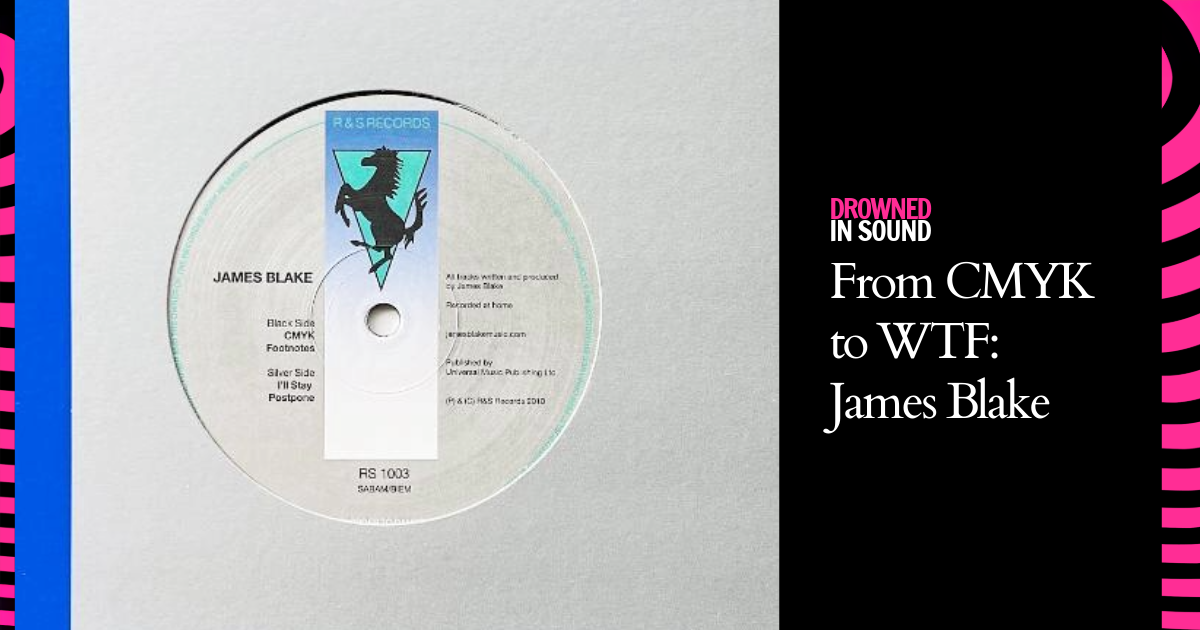
James Blake's comments about not being able to trust music journalists seem not just surprising but pretty tone-deaf for someone who has been lauded by the music press for his sophisticated electronic jams beneath that pitch-perfect soaring falsetto.
Before I get into it, read what he had to say if you missed it:
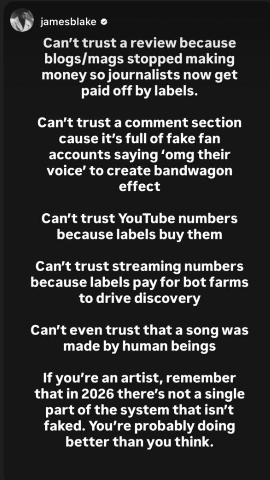
Some of those other points about AI and big money using bot-like tactics to create fake fan accounts and boost vanity metrics (something I discussed on a recent podcast with TheDrum) aren't far off the mark and I would agree but I'm too distracted by that first line: not being able to trust reviews? Paid off by labels?! Where are the receipts for these claims?
It's not something that I recognise having run DiS for 25 years, releasing records on my independent label and managing artists who've been critically acclaimed. Judging by the response from my record reviewing peers online, James Blake has not just kicked a hornet's nest but scored the sort of own goal that wakes you up at night gnawing on your foot...
Blake's comments are worth exploring a little deeper...
Re-ee-wiiind!
There was a time when no-one knew who James Blake was. He was in his bedroom geeking out with synths and software, but unlike thousands of other lads sweating over Pro Tools he then released CMYK to a sea of "OMG this is era-defining" critical acclaim.
There were blogs dedicated to sharing his every demo and remix, linked to by online communities like ours. Crowds of people were getting very excited about this new, talented, prescient young chap who made music that met a moment. Songs that had the glow of the digital era but with the heart of an 80s movie made by Amblin or Lucasfilm. This digital landscape that some dubbed as part of the emerging "dubstep" movement was topped by Blake's soaring falsetto. This new flavour [emo] electronic music felt cool and new and ours.
It was clear from the best new band features and the love for his music online that many felt he was a new Beck, D'Angelo or possibly even Prince, but with the bedroom charm of The Streets. A once in a generation talent.
What was clear to me was that outside of the tracks I was into, he was also making this gently euphoric music that wsa perfect for a mass of people working in open plan offices wearing £200+ headphones. Rather than functional music, his tunes felt part of the culture of our new reality - almost as if they had the same half-lit twilight that emanates from the edges of our keyboard keys.
Then there were the hearts-drawn-in-condensation ballads that sounded particularly great in headphones on night buses. They were also perfect for that Spotify playlist sent to a love interest, with just the right amount of croon.
Then came his debut album, and reviewers poured praise on his defiantly modern male but opposite of stale, lilies-at-dawn-scented take on RnB and his haunting cover of 'Limit To My Love'.
From The Wire to Pitchfork, Consequence of Sound to the Telegraph, there was a ridiculous amount of top marks, must-buy, album of the year contender, flavoured reviews.
Like A Map With No Ocean
Since the release of his debut album, more adoration followed, including being the runner-up in the BBC Sound of 2011 (voted for mostly by critics and broadcasters) and the BRITs Critics Choice, in which he somehow lost out to Jessie J. Then came the Mercury Prize nomination and even those hard-to-please hip-crits at Pitchfork proclaiming his debut the 12th best album of the year.
He rode this wave of praise onto the radio airwaves and prestigious festival bills. High profile mainstream media coverage followed, as did 15 years of solid, name-droppable albums. Then came his algorithm-pleasing career of collabs, co-writes and "featuring" production credits on critically celebrated records by everyone from Dave and Beyonce to ***ye and Bon Iver.
Brand deals beckoned, advertisers rushed to pay him hideous sums to use his music, and lucrative catwalk performances followed.
Life was good in James Blake's hood until [play:needle_scratch.mp3] in recent years, he left his major label home and quickly realised just how shielded he was from the reality of being a musician in the 21st century. No longer buoyed by the big bucks and savvy of teams of people at a global megacorp, he started to realise that he had to, like, think about the economics of music and post online. Yuck!
He also discovered how little access he had to contact his fans who had bought tickets for his shows or streamed his music, and somehow he had to cut through the algorithms on social media and had to, like, post. YUCK!
If only there were some established, trusted, global media outlets and bedroom run creator projects, run by people who love music, read by audiences who adore music...
Through The High Wiiiire
He's a talented lad, from a musical family, and I'm absolutely sure that without a syllable of media coverage he would still have magically had the career he's had. 100%. No diggity, no doubt. Wink-wink. Cheeky smirk. Nose laugh. 🫠 (Ok, we get it, you're being sarcastic - Ed)
I'm not deluded. The media does not have the power that it once did, but at the time Blake was coming through, his career surely benefitted from the praise and trusted human recommendations from music critics the world over.
Let's not forget that to be "a critic" does not mean you are a demolition crew, deconstructing or destroying a piece of art, but thinking about it, critically, and using your words on the page or in a TikTok script or on the radio to convey what it is about the music that resonates with you or to whom it might be their new favourite song/album/band/synth-lugging-troubadour. You're using critical thinking and your decades of nerding out and listening to a vast array of music to help map out the sonic places that are worth exploring and maybe not signposting the areas best avoided... in your opinion!
That said, I took it upon myself to read the recent James Blake coverage and revisited his seventh studio album Trying Times, which was released earlier this year.
Had he been dogpiled by angry critics? No! Quite the opposite. Once again, music critics pulled out the superlatives for a record that sounds very James Blake. Those pitch-bent backing vocals. The aircon-chilled plumes of synths and skittering drums floating towards a crescendo that usually comes a little after you anticipated it. There are the crate-digger-approved samples from a cool array of places (although why you'd sample Dizzee Rascal not long after his charge for domestic abuse, is a choice....). There's his trademark (though not protected from AI) soaring vocals and grainy textures atop bass that removes the need for laxatives. It's all so very James Blakian. And it's kinda nostalgically satisfying to hear an artist so defined in their work and sonic landscape - even if the meditative and luscious production moments hide this inkling I have that many of his genteel melodies are almost instantly forgettable.
Back To Blake's Instagram Stories
Following kickback from pretty much every music journalist I follow online about this smear on our profession presented without any evidence (to be fair, he is not a journalist or writing a Wikipedia entry that requires citations), he eventually posted a caveat like Homer Simpson disappearing into a hedge.
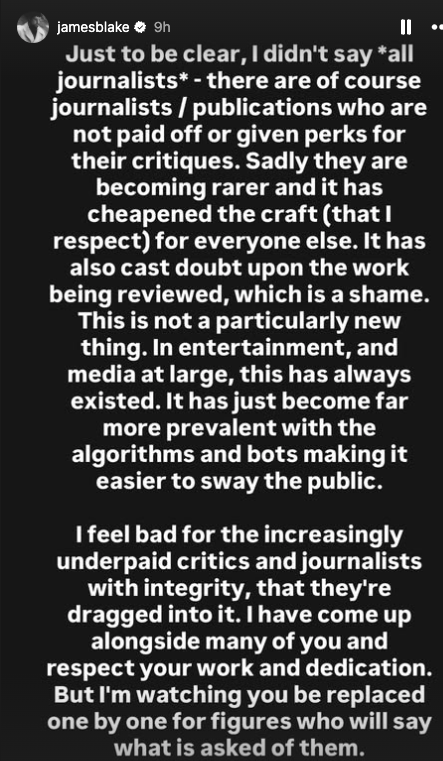
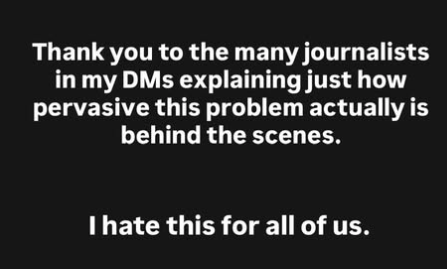
That's a bit of an eye roll after the declarative first point of his first post, isn't it? Not all journalists? (Please don't NOT ALL MENS!!! us, James)
Which reviews can't people trust and why? The ones on bloggers and playlisters that get a few quid from SubmitHub to spend time listening to hours of music in order to find something to post about whilst offering feedback to everything they hear? Or the coverage in fancy fashion magazines with 200 pages of adverts and 100 pages of editorial, whose publishers may charge the artist for the photo shoot that they can then use as part of their campaign? Or the publications that offer a package where they'll turn the magazine cover into a billboard or poster campaign across the streets of major cities? Outside of advertorials, these are some of the only examples I've caught wind of that involve any financial back and forth between labels and the media in all my years working in music. Never for reviews.
Without any clarification about who music fans can and can't trust, this is a plague on all our houses.
A Quick Open Letter To Mr Blake
James, I'm sure you understand the role media has played in your career and you admit how much it has changed. If you look around, you will also see there's a big push back against the slop era we're living through. Even magazines are popping up again (we're even launching one this autumn) and it feels as if the alg0-free print medium is likely to have a similar moment to what vinyl has had in the past decade.
If you genuinely feel bad for mispeaking and truly want to mend some bridges that are currently aflame, why not encourage your fans to follow some independent publications, radio and creators that you know people can trust? Maybe add a links page to your website? Or how about starting a trend of artists with big followings amplifying publications' social media posts about music? You could simply signal-boost music recommendations with some reposts?
Going a step further, maybe take out some adverts to directly support us and promote your latest tour or album or Patreon-like fan experiment?
If I were you, I'd take out a paid subscription to some magazines and music newsletters. Not only would it be £100-200 well spent to support media outlets but it would get a regularly delivered sense of the passion and pride most publications take in building a trusted relationship with our audiences. You would also find a pile of trusted reviews, recommending some music you might not hear otherwise.
Until we hit pause on our main website in 2019, we used to get a big arena audience of music lovers on DiS every single day, and over 2 million people on the site across the year (3 million when major artists linked to our coverage).
People like you, the music fan, reading this now, who've followed us for years, are the people that artists like Blake have been a beneficiary of reaching either because you loved his music or maybe recommended it to a friend or just supported the labels and festivals and outlets that cover him. That's how ecosystems works.
It would be overstating it to say the 50+ passionate music titles like DiS that exist around the world are the sole reason for his success (his great music did most of the heavy lifting, obvs!), but we're a cog in the system that has led to his hugely successful career that keeps him in those wide-leg designer trousers.
It's sad (in a slightly melancholic but never fully miserable kinda way... like with many of his songs) to see James Blake become a shadow of the man we thought he was (and the man Jameela Jamil often tells us he is amongst her many brilliant appearances on podcasts reminding us that together we can, collectively, overcome inequalities and that a better world is possible).
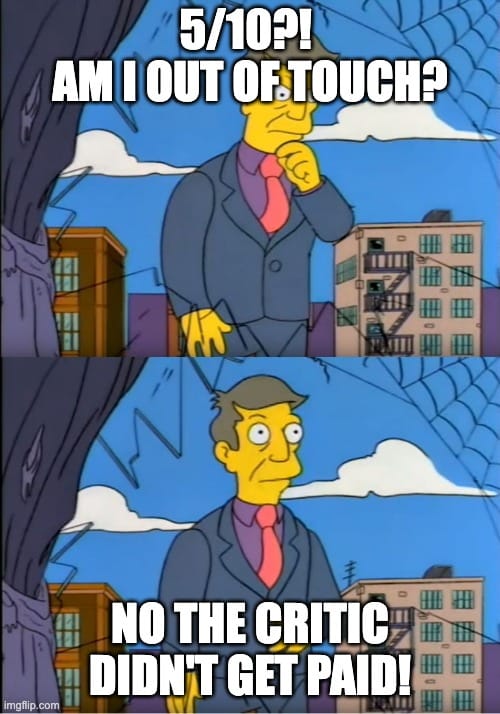
A privileged and successful artist turned into the Principal Skinner meme.
James Blake's swipe at the profession of music journalism is quite the thing. I don't mean to take it personally, it's just that I've spent the last quarter century building a publication on passion and goodwill, and I know so many brilliant people who keep their zines and blogs and pods going through hard work alongside their day jobs. We are fans too, we're just lucky enough to sometimes get early access to records and to interview some of the artists we adore.
However, I'm not saying no-one would ever take label money for kind reviews but the the vast majority of us have an ethical code and we care about trust. We care about our readers and the artists we cover. We also care about the truth, and this malign comment about our profession will not just damage our reputation but it will eat away at the acclaim of all of the artists our publications celebrate. If anything, it might stop humans trusting their fellow human to recommend them music, and we'll just be left with the acts who have the biggest ad budgets or most please the algorithm (if we're kinda at this point alreadyx).
Not to write a sentence that sounds like AI but... Blake's post and his not-quite-retraction wasn't just clunky, it felt fresh from Ricky Gervais' punching-down playbook. Or even a bit like one of those posh-af hate-raking clickbait headlines from a broadsheet columnist moaning about Net Zero during a deathly heatwave.
Hate on the haters, sure (Halsey is doing a great job of that this week and Anthony Fantano is perhaps not bathing himself in glory in how he has reacted), but James Blake's career has been blessed by great press. He has received the level of media coverage that would make most musicians blush.
Most artists would be more cautious with their words and perhaps even grateful that these titles that bestow praise on them, throw them in their album of the year lists and plaster them onto their magazine covers continue to exist despite the harsh economic reality.
At a time when The Guardian, The Sunday Times and The New York Times as well as NPR and Pitchfork are cutting back on reviews and music journalism is being defunded everywhere you look, it is the exact time that our profession needs to be defended by those whose careers have benefitted from it. We hope to see more artists and the industry speaking up for our craft as few have done so in response to Blake's post this week which has now gone semi-viral.
To be very honest, we might cover how hard it is for artists and venues to keep afloat, but independent media is now pretty much a not-for-profit hobby for the vast majority of people behind the media brands you've come to trust for their recommendations and commentary. Same goes for content creators and podcasters.
Then again, is James Blake admitting he paid for these glowing reviews from Dork and DIY and the Guardian and Irish Times? Because I'm sure the journalists and editors of these titles would be very surprised to hear that. Cite your evidence, reveal your sources, James, name names, we're all ears. You can come on our podcast if you like. We won't bite (too hard).